First Trip to Korea: Travel Checklist and Korean Astrology
· PAL:JA
Saju is Korean astrology: a birth chart read from the year, month, day and hour you were born. A first trip to Korea goes smoothly when a few things are sorted before you land: entry permission for your passport, a T-money card, a Korean map app, mobile data, a little cash, and a plan for the airport train. This checklist covers each one, plus one Korean culture experience worth planning ahead: a saju reading at a saju cafe.
Saju, also known as the Four Pillars, reads personality and timing from those four birth details. Many Koreans treat a reading as a casual outing with friends, which makes it an easy way to see a side of daily life that most itineraries miss. Our saju cafe guide explains what happens at the table.
What do you need to do before your first trip to Korea?
Check your entry rules, plan your airport transfer, and set up transport, maps, data and payment. The table is the whole list in one place.
| Item | When | Tip |
|---|---|---|
| K-ETA or visa | Weeks before you book | Check the official site for your passport |
| Passport validity | Before you book | Check the date against your airline and entry rules |
| eSIM or SIM | Before you fly | An eSIM can be set up at home |
| Korean map app | Before you fly | Install Naver Map or Kakao Map |
| T-money card | At the airport | Sold at convenience stores |
| Some cash in won | At the airport | For markets, street food and top-ups |
| Plug adapter | Before you fly | Korea uses 220V and round two-pin plugs (types C and F) |
| Your saju type | Before you fly | Free on the saju type page |
| A saju cafe saved on the map | Before you fly | Booking requests need 3 days |
Do you need a K-ETA or a visa for Korea?
It depends on your passport, so check the official K-ETA website and the Korean embassy or consulate for your country before you book. The rules on which passports need a K-ETA (Korea Electronic Travel Authorization), which are exempt, and which need a visa have changed more than once, so do not rely on a forum post or an old blog.
A few habits help:
- Apply only through the official government site, not a third-party agent.
- Apply well before your flight, not at the gate.
- Make sure the name and passport number match your ticket exactly.
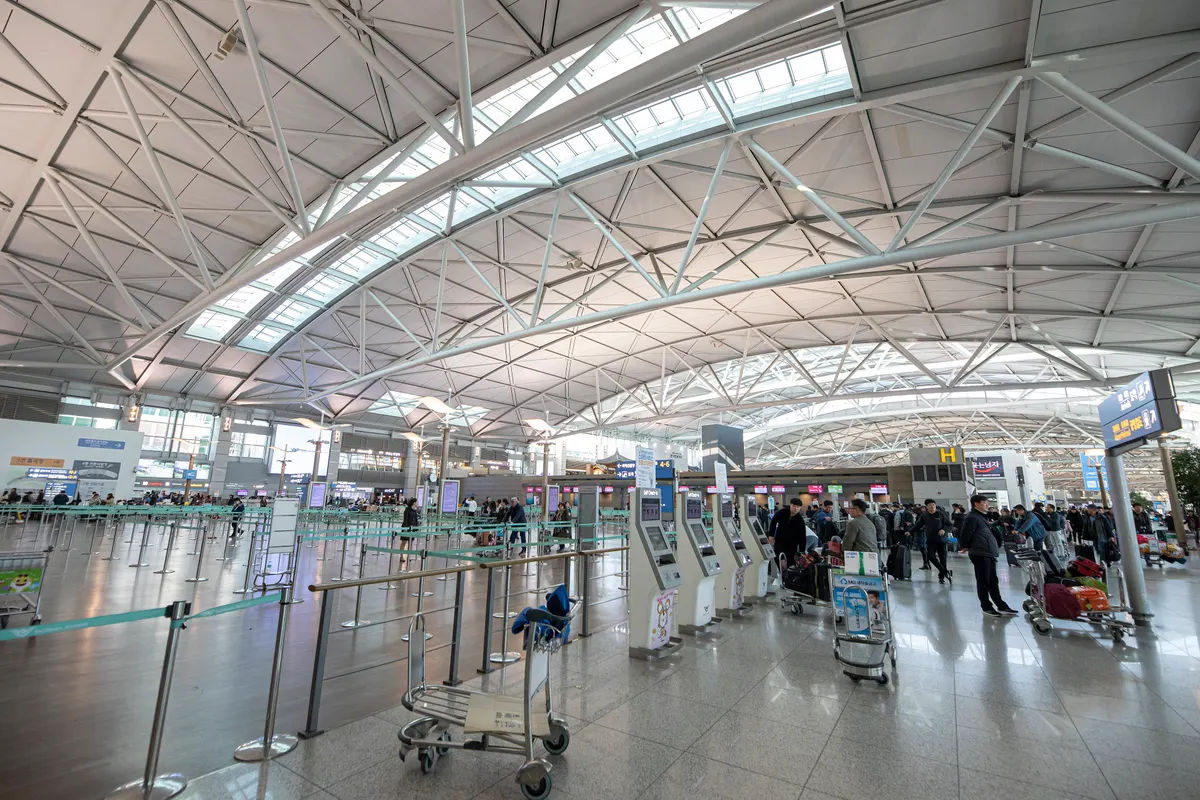
How do you get from Incheon Airport to Seoul?
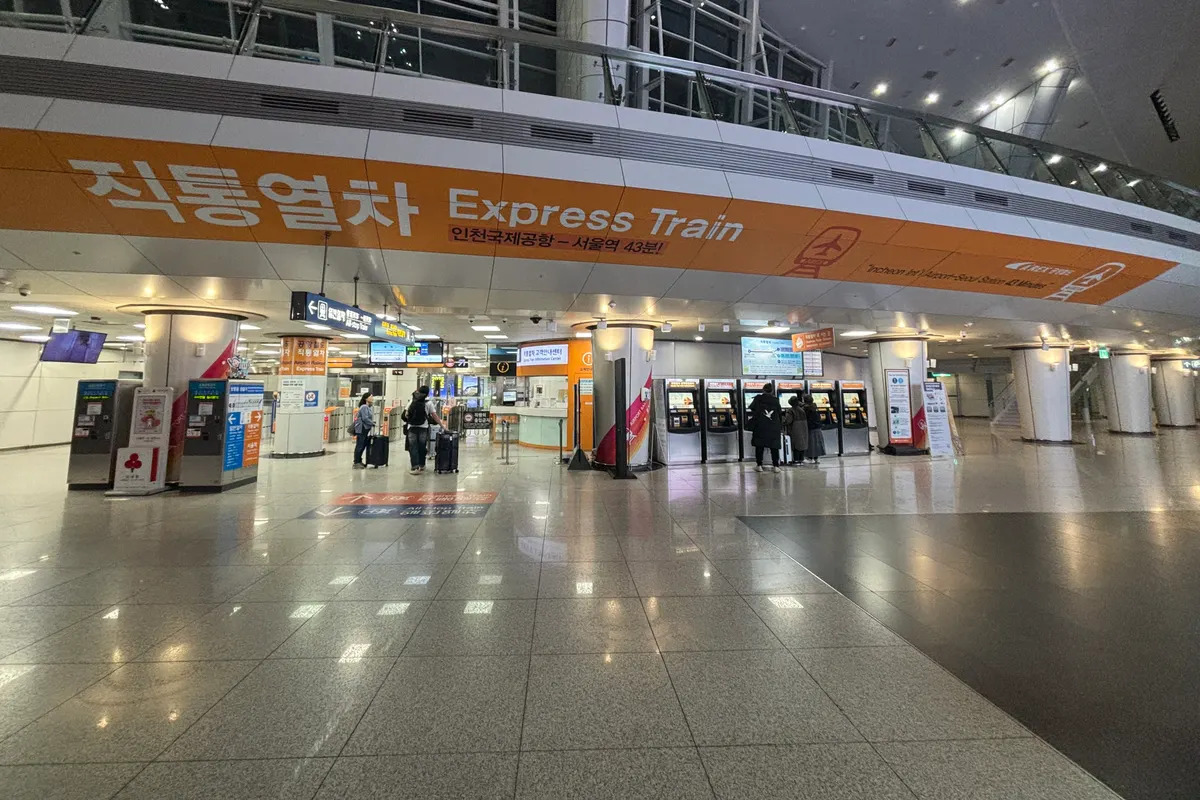
The simplest route for most first-time visitors is AREX, the airport railroad from Incheon International Airport to Seoul Station. It has a nonstop express train and an all-stop train that connects with the Seoul subway.
The all-stop train calls at stations such as Gimpo Airport, Hongik University (for Hongdae) and Gongdeok before Seoul Station, so many travellers ride it straight to their area and pay with a T-money card. Airport buses and taxis are the other options, and a bus can be easier with heavy luggage if it stops near your hotel.
How do you get around Seoul with a T-money card?
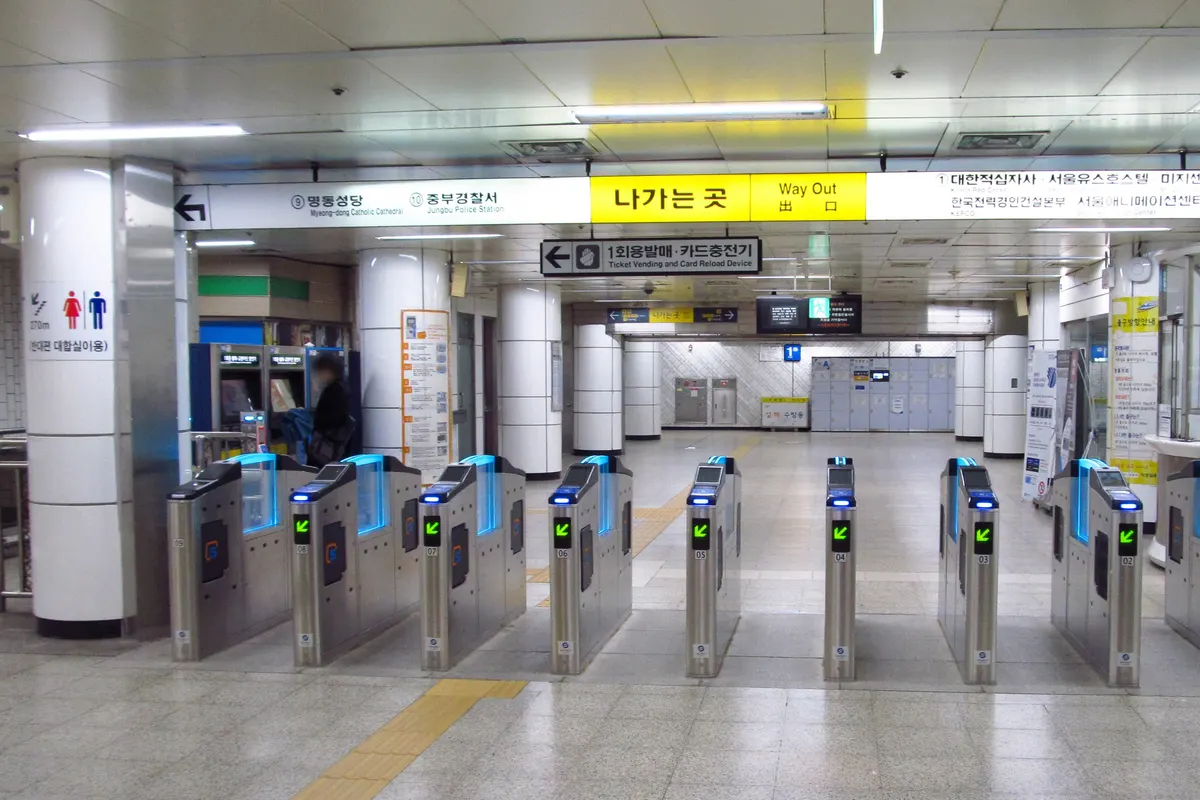
A T-money card is a rechargeable transport card that you tap on the subway, city buses and many taxis. Buy one at a convenience store or a subway station and top it up at the machines in any station, where top-ups are usually paid in cash.
- Tap in and tap out on the subway, and tap again when you leave a bus, so transfers are counted.
- The same card works in Busan, where the KTX high-speed train from Seoul Station takes roughly 2.5 hours.
- Many convenience stores accept T-money for small purchases too.
Which map apps work best in Korea?
Use a Korean map app, Naver Map or Kakao Map, for walking and transit directions. Some global map apps work poorly in Korea for walking directions, so a Korean app saves a lot of wrong turns.
Both show subway exits, bus numbers and walking routes, and Naver Map has an English menu. Save your hotel, and keep the Korean address of each place you plan to visit; taxi drivers read Korean addresses far faster than English ones.
Should you get a SIM card or an eSIM?
An eSIM is usually the easiest choice if your phone supports it, because you can set it up before you leave and land with data already working. A physical SIM or a pocket Wi-Fi from the airport also works, and pocket Wi-Fi suits groups who share one connection.
You need data for map apps, translation and messaging. Free Wi-Fi is common in subway stations, cafes and hotels, but it is not something to depend on while walking.
Do you need cash in Korea, and do you tip?
Cards are accepted almost everywhere, including small shops and taxis, but carry some cash in won. Traditional markets, street food stalls and T-money top-ups are the usual places where cash still helps.
Tipping is not expected in Korea, in restaurants, taxis or hotels. The price on the menu is the price you pay. Some saju cafes also prefer cash or a bank transfer for the reading, so ask before you start.
Which areas should you see on a first trip to Seoul?
Most first itineraries mix palaces, shopping streets and one or two neighborhoods with their own character. Five areas cover a lot of ground, and each one also has saju cafes.
| Area | Good for | Subway |
|---|---|---|
| Myeongdong | Shopping, street food, Namsan and N Seoul Tower nearby | Myeongdong Station, Line 4 |
| Hongdae | University area, indie music, street performers | Hongik University Station, Line 2 and AREX |
| Ikseon-dong | Hanok alleys near Insadong and Changdeokgung Palace | Jongno 3-ga Station |
| Seongsu | Cafes and pop-up stores in old factory buildings | Seongsu Station, Line 2 |
| Gangnam | Apgujeong, Sinsa and Garosu-gil | Gangnam Station, Line 2; Sinsa Station, Line 3 |
Gyeongbokgung Palace and Bukchon Hanok Village are within walking distance of Ikseon-dong, so that corner of Jongno makes an easy first day.
What should you do about saju before you fly?
Find your saju type before the trip, so you arrive knowing what to ask. Your saju type, which saju experts call your Day Master, is the heavenly stem of your day pillar: one of ten, such as Big Tree 甲 or Ocean 壬.
To find it you need your birth date, your birth time if you know it, and your birth city. PAL:JA calculates your chart with fixed saju rules and adjusts it to true solar time for your birth city; in Seoul, for example, the sun runs about 32 minutes behind the clock. You can get your saju type free, with no sign-up, on the saju type page, or right here.
Calculate your chart — free
Then open the saju cafe map and save one or two cafes near where you are staying. It lists 71 saju cafes confirmed open on Naver Map or Kakao Map, as checked in October 2026, across Myeongdong, Hongdae, Seongsu, Gangnam, Ikseon-dong and Busan.
- Each cafe shows its hours, phone and its address in English and Korean, with a button to copy the Korean address for a taxi driver.
- Directions open in Naver Map or Google Maps.
- For cafes that take requests, you can send a booking request at least 3 days ahead after signing in. PAL:JA calls the cafe in Korean and contacts you by WhatsApp or text when the time is confirmed.
- Booking through PAL:JA is free, and you pay the cafe directly.
Can you get a saju reading if you do not speak Korean?
Yes. Some saju cafes say they offer English interpretation, and for a reader who speaks Korean only you can open the cafe interpreter on your phone.
It is a two-way interpreter built for saju readings. You put the phone on the table, and the reader's half of the screen flips so each of you reads your own side. It needs a sign-in and is paid: each 1-hour session uses 1 bok, PAL:JA's credit, and it is included with premium. If you want to know what to expect first, read how saju reading in English works.
How many days do you need for a first trip to Korea?
Five to seven days is a comfortable length for Seoul, with time for palaces, two or three neighborhoods and a slow evening. Add two or three days if you want to take the KTX to Busan for the beach and the markets.
Is Korea easy for a first-time visitor?
Yes, for most people. Public transport is clean and signposted in English, cards work almost everywhere, and the 1330 Korea Travel Hotline answers tourist questions in several languages.
When should you book a saju cafe reading?
Plan it for a free afternoon early in the trip, not the last day, so a full schedule does not squeeze it out. If you request a booking through PAL:JA, send it at least 3 days ahead.