
Korea in November: Weather, Autumn Leaves and Korean Horoscope
· PAL:JA
Saju is Korean astrology: a birth chart read from the year, month, day and hour you were born. Korea in November is cool, dry and bright, with average highs around 12 °C (53 °F) in Seoul and 17 °C (62 °F) in Busan, the last autumn leaves in the south, and markets piled with cabbage for kimjang, the winter kimchi-making season. It is also when many Koreans start looking ahead to next year's Korean horoscope, which makes a saju cafe visit feel very much of the season.
This guide covers the weather, the leaves, what to pack, kimjang, and the one day in November when the whole country goes quiet. Then it explains why late autumn is saju season, and how to fit a reading into your trip. If saju is new to you, start with what saju is.
What is the weather like in Korea in November?
November in Korea is the shift from autumn to winter: mild, sunny days and cold nights. Seoul averages a high of 11.9 °C and a low of 3.5 °C, while Busan on the south coast stays several degrees warmer.
| City | Average high | Average low | Rain | Rainy days |
|---|---|---|---|---|
| Seoul | 11.9 °C (53 °F) | 3.5 °C (38 °F) | 51 mm | about 6 |
| Busan | 16.6 °C (62 °F) | 8.3 °C (47 °F) | 50 mm | about 6 |
These are the 1991 to 2020 averages from the Korea Meteorological Administration. Early November often feels like late autumn, with light-jacket afternoons. By the end of the month, Seoul mornings can be close to freezing, and the days are short, with the sun setting before 6 pm. Rain is light compared with summer, so November is one of the drier, clearer months of the year.
When do the autumn leaves peak in Korea in November?
The leaves turn from north to south. The 2026 autumn leaves map from the Korea Tourism Organization and the Korea National Arboretum put the peak in Seoul and Gangwon Province in late October, and in the southern provinces in early to mid November.
That means early November still has colour in Seoul, especially the yellow ginkgo trees that line many city streets, while the south is at its best. Good places for leaves on a November trip:
- Deoksugung and its stone-wall road. A palace in central Seoul next to City Hall Station, with ginkgo and maple trees around its walls.
- Seoul's palace gardens. The trees inside the royal palaces often hold their colour into early November.
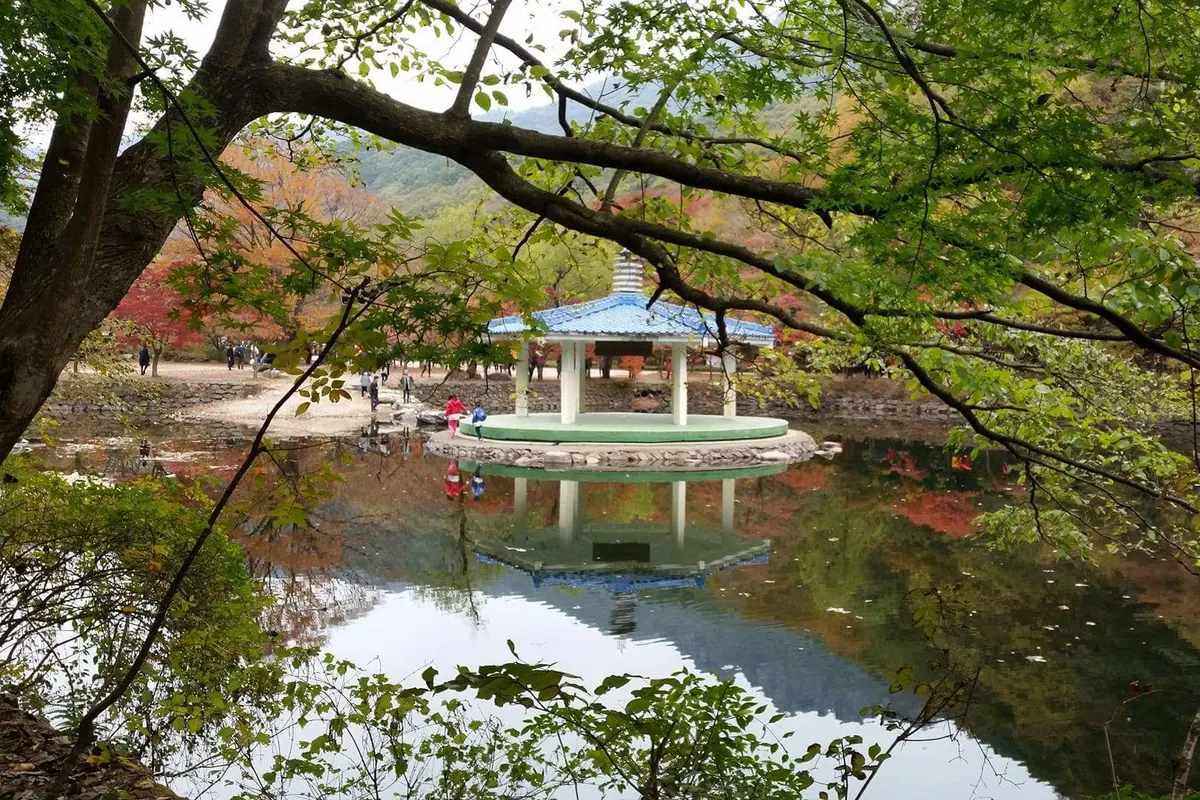
- Naejangsan National Park. A mountain park in North Jeolla Province, known for its maples, near Jeongeup.
- Busan. The coast turns later than Seoul, so the parks and temples keep colour deeper into the month.
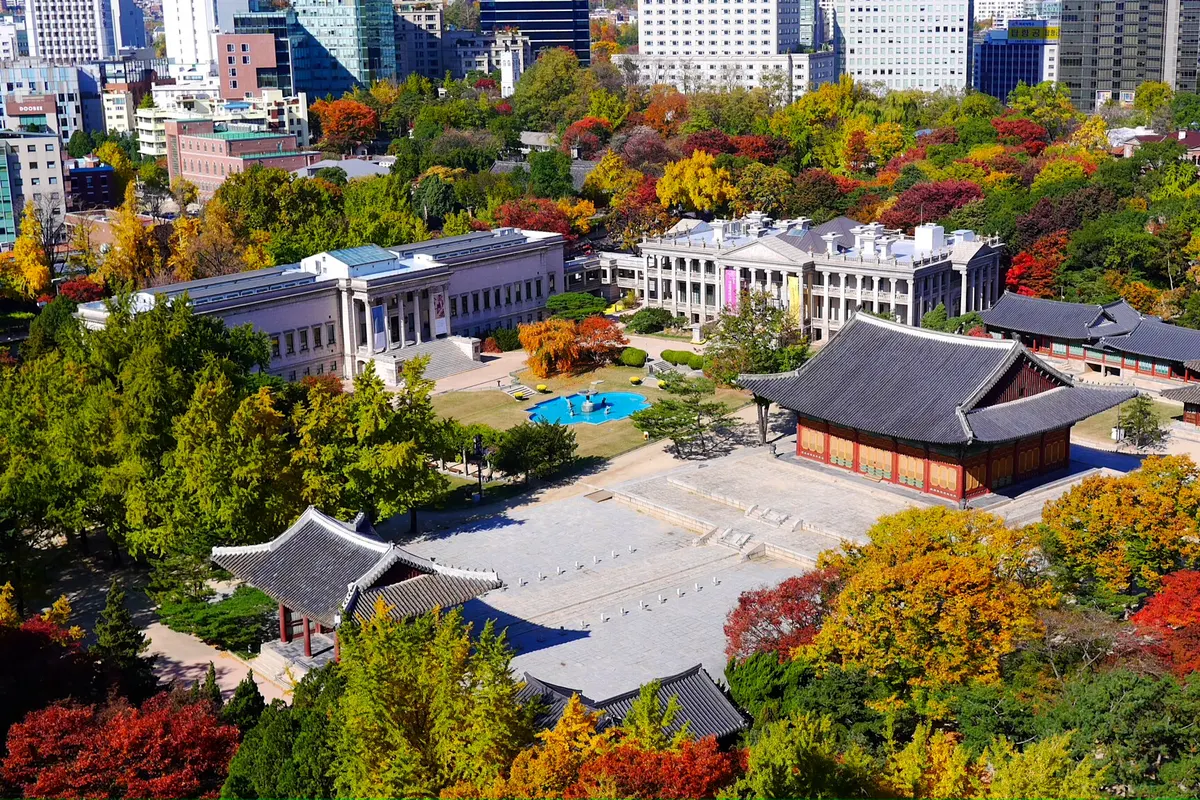
Colours shift a little every year, so check the official map on VisitKorea close to your dates. If you land in late November, go south for the last of the leaves.
What should you pack for Korea in November?
Pack layers: a warm jacket for evenings, a sweater or fleece, and comfortable walking shoes. Add a scarf and gloves if you travel in the second half of the month.
- A warm outer layer. A padded or wool jacket covers cold nights, especially at riverside parks and viewpoints.
- Light layers underneath. Sunny afternoons can feel mild, and indoor spaces are heated.
- Walking shoes. Palaces, markets and mountain trails all mean a lot of walking.
- Moisturiser and lip balm. The air gets dry as heating comes on.
- A small umbrella. Rain is light in November, but a shower can still come through.
A T-money card works on subways and buses in Seoul and Busan, and tipping is not expected anywhere in Korea. Our first trip to Korea tips cover the rest of the basics.
What is kimjang season in Korea?
Kimjang is the late-autumn custom of making and sharing a large batch of kimchi to last through winter. Families and neighbours often make it together, and UNESCO added it to its intangible cultural heritage list in 2013.
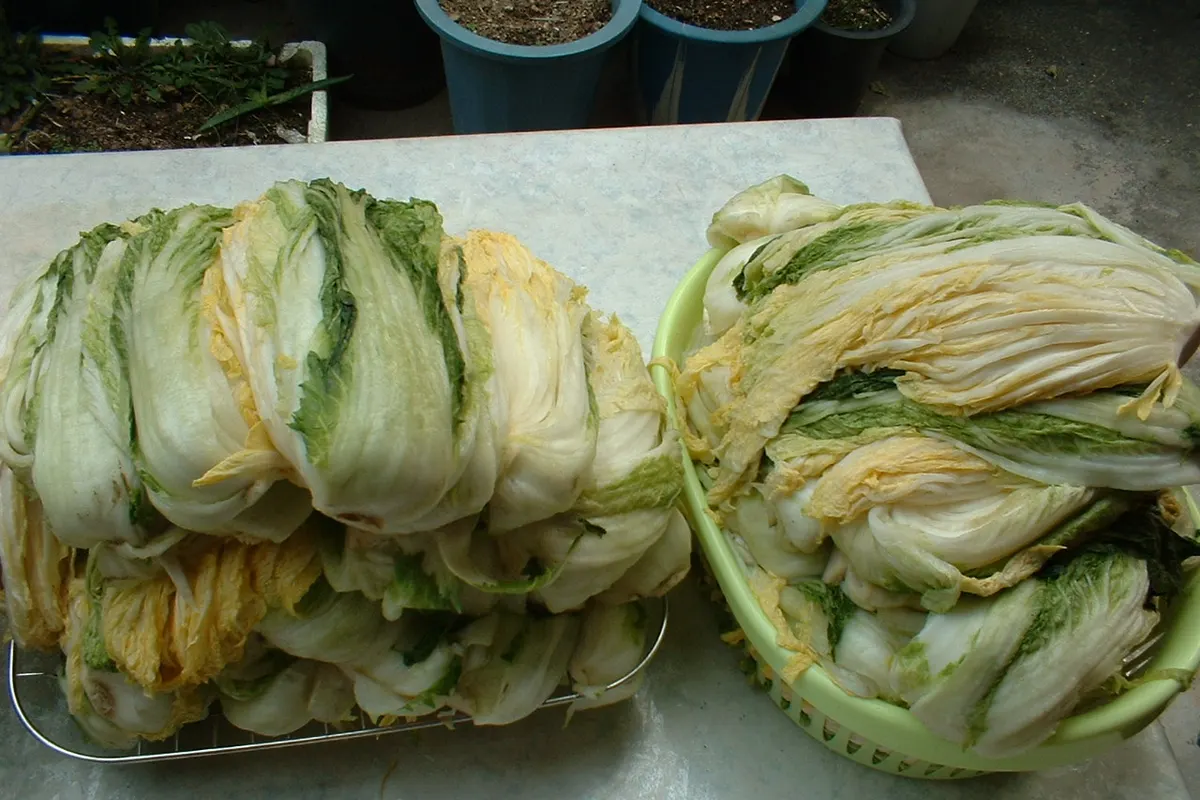
For a traveller, kimjang shows up in the markets. Traditional markets are stacked with napa cabbage, radish, garlic and red chilli flakes, and many restaurants serve fresh, barely fermented kimchi with boiled pork. It is a good month to try kimchi at its freshest.
What is Suneung day, and how does it affect travel?
Suneung is the national college entrance exam, and in 2026 it falls on Thursday 19 November. On that day the country slows down to give more than 550,000 registered test takers a quiet, on-time exam.
What it means for a visitor, according to the Ministry of Education's plan for the day:
- Later rush hour. Government offices and companies are asked to start work at 10:00 or later, so the morning commute shifts.
- Closed streets near schools. Cars are kept out within 200 m of test sites, so taxis may drop you further away.
- Quiet skies. Take-offs and landings are adjusted during the English listening test, from 13:10 to 13:35, which can move flight times.
- Extra early trains. Subway service in the Seoul area is increased in the early morning for students.
Leave extra time that morning, check your flight if it is that afternoon, and keep the noise down near schools. You may see parents waiting outside the gates, and Korean friends wishing exam takers well.
Why do Koreans check next year's saju in late autumn?
The end of the year is when many Koreans book a saju reading to look at the year ahead. With the exam over, year-end parties starting and a new year coming, November and December are a popular time for readings.
In saju, 2027 is the year pillar 丁未: the heavenly stem 丁, Yin Fire, over the earthly branch 未, the Goat. That makes it the Year of the Fire Goat. The saju year does not start on 1 January or at Lunar New Year, but at Ipchun, the start of spring, around 4 February. Our page on the 2027 Year of the Goat explains what 丁 and 未 mean, and how a reader sets the new year pillar against your own chart.
A reading is a conversation about your tendencies and timing, not a promise about what happens next. Many Koreans treat it as a casual night out, often with friends.
Can you visit a saju cafe in Korea in November?
Yes. The PAL:JA saju cafe map lists 71 saju cafes confirmed open on Korean map apps: 53 in Seoul, across Hongdae, Gangnam, Ikseon-dong, Myeongdong and Seongsu, and 18 in Busan.
A saju cafe is a small cafe or consultation room where a reader turns your birth date and time into a chart and talks you through it at the table. A reading fits well into a cold November evening, after the palaces close. Our saju cafe guide explains what happens during a visit, and things to do in Busan covers the cafes on the coast.
Because year-end is busy, book ahead. Send a booking request from a cafe's page on the map, and PAL:JA calls the cafe in Korean for you:
- Sign in. Booking requests need a Google or Apple sign-in.
- Book 3 days ahead. Requests need at least 3 days' notice, so send one before you fly.
- Pay the cafe. PAL:JA charges nothing for the booking; you pay the cafe directly.
- Confirm in time. Tap "I'm coming" or cancel in My bookings at least 24 hours before, or the booking is cancelled automatically.
Most readers speak only Korean. The Cafe Translator is a two-way interpreter built for saju readings, and it runs as a paid one-hour session.
What should you know before a saju reading?
Bring your birth date, birth time and birth city, and find your saju type before the trip. Your saju type, which saju experts call your Day Master (日干), is the heavenly stem of the day you were born, and it is where most readers start.
There are ten saju types, from Big Tree (甲) and Sun (丙) to Ocean (壬) and Morning Dew (癸). Knowing yours makes a fast Korean reading much easier to follow, and it helps you see how 丁 Fire in 2027 meets your own element. Sign in and open your chart with 1 bok ($1.99) on the saju type page to see yours, or right here.
Calculate your saju chart
PAL:JA builds your chart with fixed saju rules and corrects your birth time to true solar time from your birth city's longitude, the way a careful reader does. That way the chart you bring matches the one the reader builds.
Is November a good time to visit Korea?
Yes. November has clear, dry weather, fewer crowds than the October leaf peak, the last autumn colour in the south, and kimjang food in the markets.
Does it snow in Korea in November?
Snow is not typical in November. The cold, snowy months are December to February, when Seoul's average low drops below freezing.
How cold is Seoul at night in November?
Seoul's average November low is 3.5 °C (38 °F), and late-month nights can reach freezing. Plan for a warm jacket after dark.