
Korean Phrases for Travelers and a Korean Horoscope Cafe
· PAL:JA
Saju is Korean astrology, sometimes called the Korean horoscope: a birth chart read from the year, month, day and hour you were born. The Korean phrases for travelers in this guide cover the moments that come up every day on a trip: saying hello, ordering food, shopping, taking a taxi and, if you want a uniquely Korean experience, sitting down for a reading at a saju cafe.
Each section has a short table with the Korean, the romanization and the meaning. You do not need to read Hangul to use them: say the romanized version slowly, and most people in Seoul and Busan will understand you and switch to gestures or simple English if needed.
What are the most useful Korean phrases for travelers?
The most useful Korean phrases for travelers are hello, thank you, excuse me, "this one, please" and "how much is it?" With those five you can get through most cafes, markets and shops.
- Annyeonghaseyo. Hello, for anyone, at any time of day.
- Gamsahamnida. Thank you, the polite form you can use with everyone.
- Jeogiyo. Excuse me, to call staff in a restaurant or get someone's attention.
- Igeo juseyo. This one, please, while pointing at a menu or a product.
- Eolmayeyo? How much is it?
The word juseyo means "please give me", and it turns almost any noun into a request. Mul juseyo is "water, please" and yeongsujeung juseyo is "a receipt, please".
How do you pronounce romanized Korean?
The romanization here is the Revised Romanization of Korean, the official system South Korea released in 2000 and uses for place names on road and subway signs. Read the vowels as in Spanish or Italian, and say every syllable evenly without a strong stress.
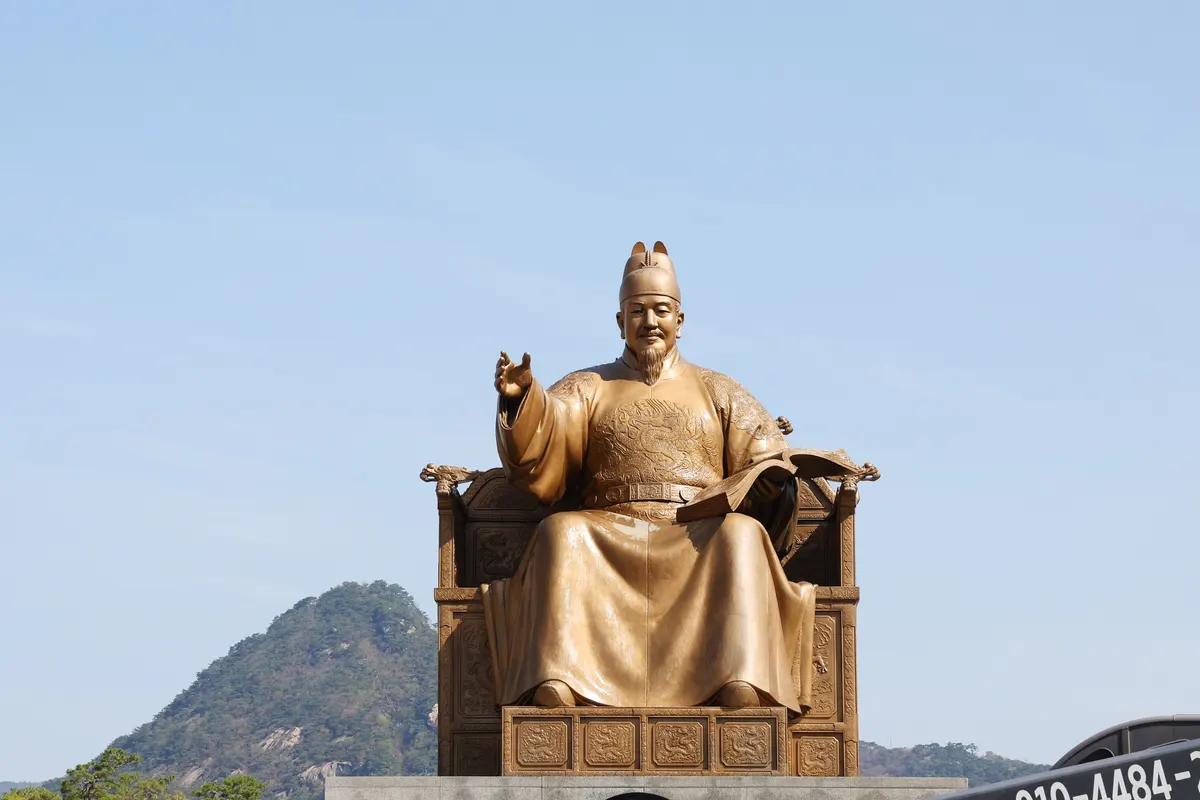
The Korean alphabet, Hangul, was created under King Sejong in 1443 and published in 1446. It has 24 basic letters, 14 consonants and 10 vowels, so many visitors learn to sound out signs in an afternoon. A few tips for the romanization:
- eo sounds like the "u" in "fun", so eolmayeyo starts like "ul".
- eu is a short "uh" with the lips flat, as in teureongkeu (trunk).
- ae and e both sound close to the "e" in "bed".
- -mnida and -yo endings make a sentence polite, so keep them on.
The golden statue of King Sejong in Gwanghwamun Square is a good stop on a walk between Gyeongbokgung Palace and City Hall.
Which Korean greetings should you learn first?
Learn annyeonghaseyo for hello and gamsahamnida for thank you before anything else. A small nod of the head with either phrase is polite and natural.
| Korean | Romanization | Meaning |
|---|---|---|
| 안녕하세요 | annyeonghaseyo | Hello |
| 감사합니다 | gamsahamnida | Thank you |
| 죄송합니다 | joesonghamnida | I am sorry |
| 저기요 | jeogiyo | Excuse me (to get attention) |
| 네 / 아니요 | ne / aniyo | Yes / No |
| 안녕히 계세요 | annyeonghi gyeseyo | Goodbye (said by the person leaving) |
There are two goodbyes in Korean. If you are leaving a shop, say annyeonghi gyeseyo ("stay in peace"); if the other person is leaving, say annyeonghi gaseyo ("go in peace").
What do you say when ordering food in Korea?
Point at the menu and say igeo juseyo ("this one, please"), then use gyesanhae juseyo when you want the bill. In many restaurants you pay at the counter by the door on the way out.
| Korean | Romanization | Meaning |
|---|---|---|
| 이거 주세요 | igeo juseyo | This one, please |
| 물 주세요 | mul juseyo | Water, please |
| 안 맵게 해 주세요 | an maepge hae juseyo | Not spicy, please |
| 포장해 주세요 | pojanghae juseyo | To go, please |
| 계산해 주세요 | gyesanhae juseyo | The bill, please |
| 맛있어요 | masisseoyo | It is delicious |
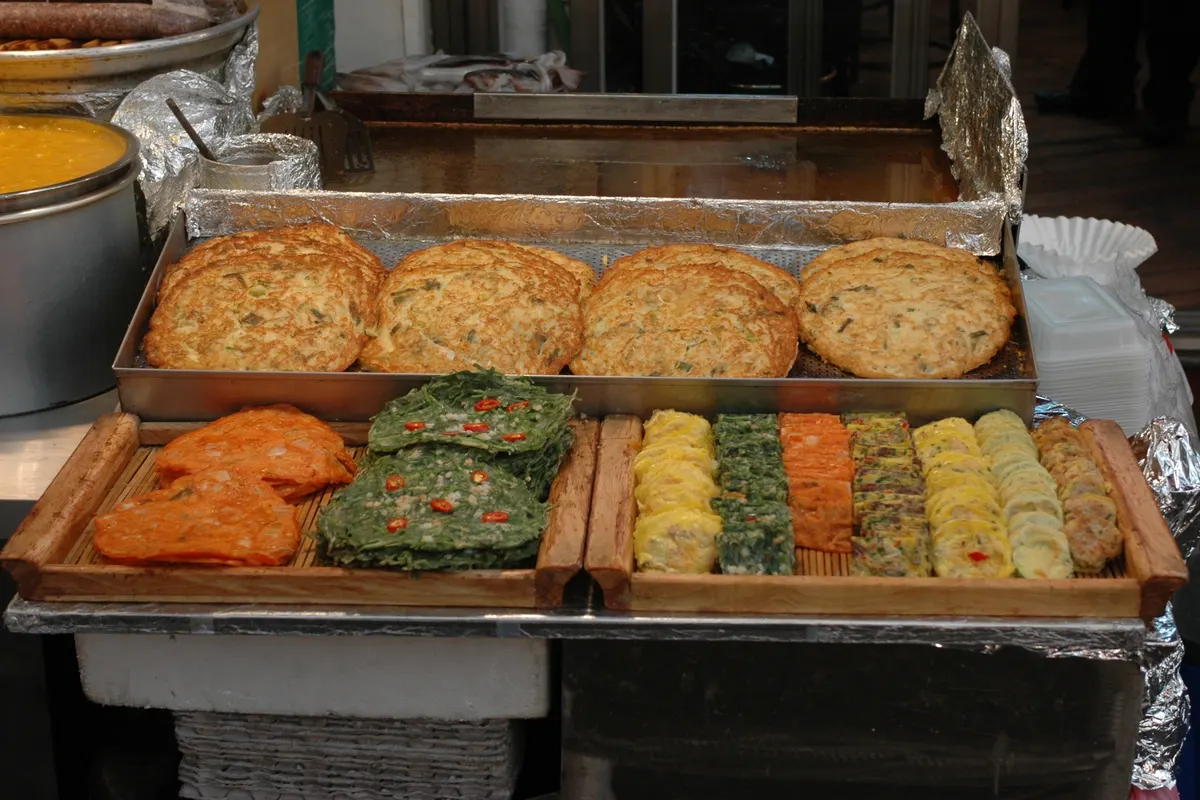
Market food stalls are the best place to practise. Gwangjang Market in Jongno, a traditional market dating to 1905 near Jongno 5-ga Station on Line 1, is known for bindaetteok, a crisp mung bean pancake. Water is usually self-service in Korean restaurants, so look for a jug or a water dispenser before you ask.
Which Korean phrases help when shopping?
Eolmayeyo ("how much is it?") and kadeu dwaeyo ("can I pay by card?") cover most shopping. Cards are accepted almost everywhere, but small market stalls may prefer cash.
| Korean | Romanization | Meaning |
|---|---|---|
| 얼마예요? | eolmayeyo? | How much is it? |
| 카드 돼요? | kadeu dwaeyo? | Can I pay by card? |
| 이거 있어요? | igeo isseoyo? | Do you have this? |
| 구경만 할게요 | gugyeongman halgeyo | I am just looking |
| 봉투 주세요 | bongtu juseyo | A bag, please |
Staff in big shopping streets such as Myeongdong often speak some English, and a calculator or phone screen is the usual way to show a price. Our Myeongdong guide covers skincare shopping and the tourist tax refund.
What should you say to a taxi driver in Korea?
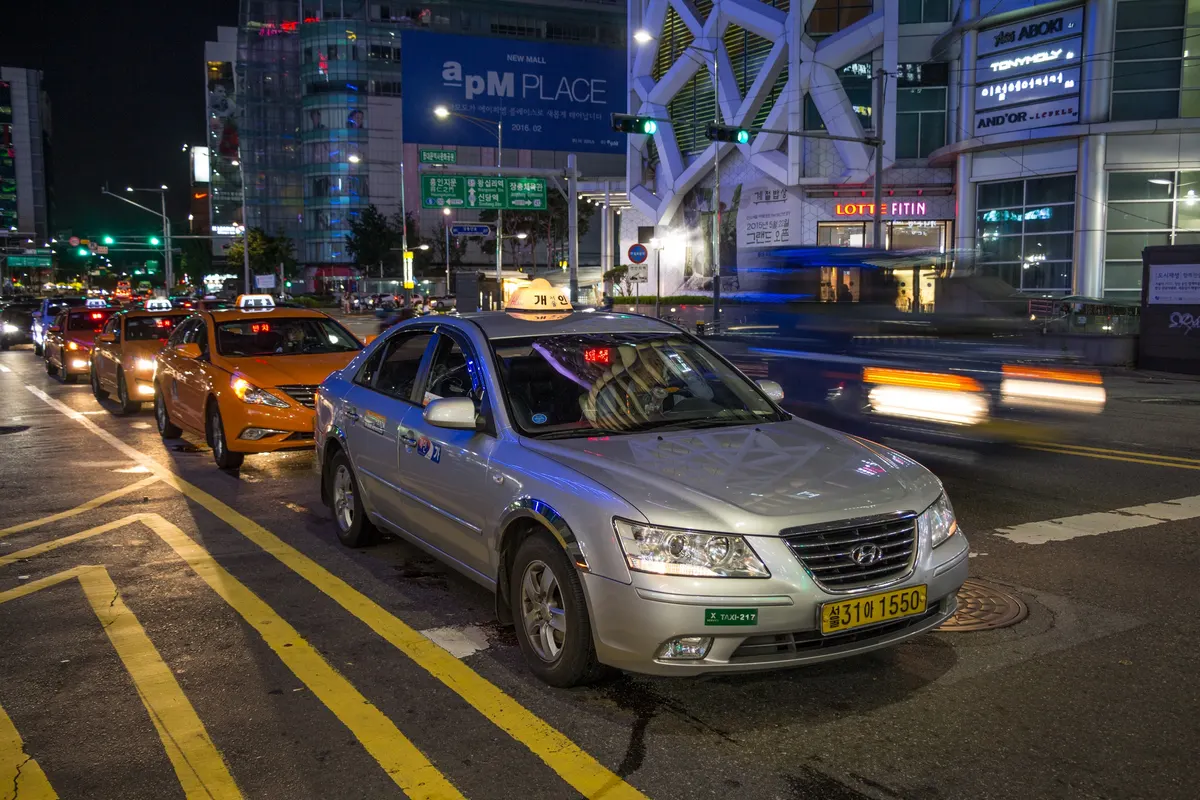
Show the address in Korean on your phone and say yeogiro ga juseyo ("please go here"). Drivers navigate by the Korean address, so an English name alone often does not work.
| Korean | Romanization | Meaning |
|---|---|---|
| 여기로 가 주세요 | yeogiro ga juseyo | Please go here |
| 여기서 세워 주세요 | yeogiseo sewo juseyo | Please stop here |
| 얼마나 걸려요? | eolmana geollyeoyo? | How long does it take? |
| 트렁크 열어 주세요 | teureongkeu yeoreo juseyo | Please open the trunk |
| 영수증 주세요 | yeongsujeung juseyo | A receipt, please |
If you get stuck, the 1330 Korea Travel Hotline, run by the Korea Tourism Organization, answers in English 24 hours a day and can interpret over the phone. More arrival basics are in our first trip to Korea checklist.
What Korean phrases help at a saju cafe?
At a saju cafe, say saju boreo wasseoyo ("I came for a saju reading") and give your birth date, birth time and whether it is a solar or lunar date. A saju cafe is a small cafe or consultation room where a reader turns your birth details into a chart and talks you through it.
| Korean | Romanization | Meaning |
|---|---|---|
| 사주 보러 왔어요 | saju boreo wasseoyo | I came for a saju reading |
| 예약했어요 | yeyakaesseoyo | I have a booking |
| 양력 생일이에요 | yangnyeok saengirieyo | My birthday is a solar (Western calendar) date |
| 태어난 시간은 몰라요 | taeeonan siganeun mollayo | I do not know my birth time |
| 천천히 말해 주세요 | cheoncheonhi malhae juseyo | Please speak slowly |
| 써 주실 수 있어요? | sseo jusil su isseoyo? | Could you write it down? |
Readers often write the Chinese characters of your chart on paper as they talk. One word to listen for is ilgan, the Day Master (日干), which is the heavenly stem of your day pillar and the core of the chart. Our saju cafe guide explains what happens during a reading, step by step.
Where can you find a saju cafe in Korea?
The PAL:JA saju cafe map lists 71 saju cafes confirmed open on Naver Map or Kakao Map: 53 in Seoul and 18 in Busan. Each listing has the Korean address for the taxi, the phone number and the listed hours.
The Seoul cafes are spread across five areas:
- Hongdae. 24 cafes around Hongdae, Yeonnam and Hapjeong.
- Gangnam. 12 cafes around Gangnam, Apgujeong and Sinsa.
- Ikseon-dong. 10 cafes around Ikseon-dong, Insadong and Jongno.
- Myeongdong. 6 cafes around Myeongdong and Euljiro.
- Seongsu. 1 cafe in Seongsu.
The map itself costs nothing to use, and hours can change, so check the listing on the day you go.
How do you book a saju cafe without speaking Korean?
Send a booking request from the cafe's page on the map, and PAL:JA calls the cafe in Korean for you. You hear back by WhatsApp or text message when your time is confirmed.
- Sign in. Booking requests need a Google or Apple sign-in.
- Book ahead. Requests need at least 3 days' notice, so send one before you fly.
- Pay the cafe. PAL:JA charges nothing for the booking; you pay the cafe directly.
- Confirm or cancel. Tap "I'm coming" or cancel in My bookings at least 24 hours before, or the booking is cancelled automatically.
Most readers speak only Korean, so the phrases above go a long way. For the reading itself, the Cafe Translator is a two-way interpreter built for saju readings, and the reader's half of the screen flips so they can read it across the table. It is a paid feature, charged per one-hour session.
What should you look up before your saju reading?
Know your birth date, birth time and birth city, and find your saju type before the trip. Your saju type is your Day Master, one of ten, and knowing it makes the reader's words much easier to follow.
The ten saju types are Big Tree (甲), Wildflower (乙), Sun (丙), Candlelight (丁), Mountain (戊), Garden Soil (己), Sword (庚), Jewel (辛), Ocean (壬) and Morning Dew (癸). Sign in and open your chart with 1 bok ($1.99) on the saju type page, or right here.
Calculate your saju chart
PAL:JA builds your chart with fixed saju rules and true solar time for your birth city, not just the clock time. In Seoul the sun runs about 32 minutes behind the clock, which can shift your hour pillar if you were born near the change of an hour.
Do Koreans expect tourists to speak Korean?
No. Most people are happy with a simple annyeonghaseyo and gamsahamnida, and a few words in Korean usually get a warm smile.
Is annyeonghaseyo polite enough for everyone?
Yes. Annyeonghaseyo is polite and works for shop staff, taxi drivers, older people and saju readers alike.
Who can you call for help with Korean on a trip?
Call the 1330 Korea Travel Hotline for English help at any hour. For a saju reading, the Cafe Translator or a Korean-speaking friend works best.