
Korea in January: Weather, Ice Festivals and Korean Horoscope
· PAL:JA
Saju is Korean astrology: a birth chart read from the year, month, day and hour you were born. Korea in January is the heart of winter: Seoul averages a high of 2.1 °C (36 °F) and a low of −5.5 °C (22 °F), the skies are mostly dry and clear, and the mountains of Gangwon Province fill with skiers and ice-fishing crowds. It is also a quiet month in the Korean horoscope calendar, because in saju the 2026 Fire Horse year has not ended yet.
This guide covers the weather, the snow and ice season, the Han River in deep cold, indoor plans for the coldest days and what to pack. Then it explains why a January birthday in 2027 still belongs to the Horse, and how a saju cafe fits into a winter trip. If you are planning the month before, see our guide to Korea in December.
What is the weather like in Korea in January?
January is the coldest month of the year in Korea, cold and dry rather than wet. Seoul usually stays near or below freezing, while Busan on the south coast is several degrees milder.
| City | Average high | Average low | Precipitation | Snowy days |
|---|---|---|---|---|
| Seoul | 2.1 °C (36 °F) | −5.5 °C (22 °F) | 16.8 mm | about 7 |
| Busan | 8.2 °C (47 °F) | −0.1 °C (32 °F) | 34.5 mm | about 1 |
These are the 1991 to 2020 averages from the Korea Meteorological Administration. A cold wave from Siberia can push Seoul below −10 °C for several days, and the wind along the river makes it feel colder. The upside is the light: Seoul gets about 170 hours of sunshine in January, so most days are bright, and the sun sets before 6 pm all month.
Does it snow in Korea in January?
Yes, but usually not much at a time. Seoul averages about 7 days with some snow in January, often a light dusting that melts from the main roads within a day, while Busan rarely sees snow at all.
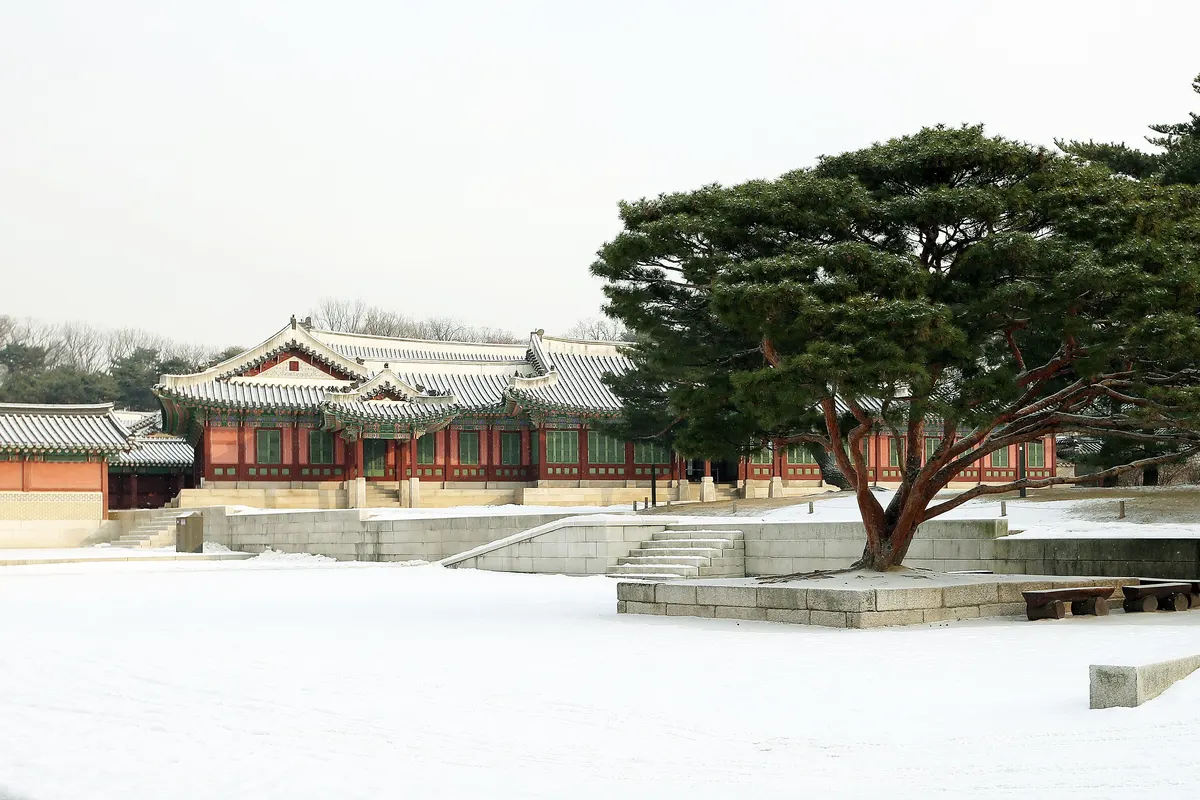
The heavy, lasting snow is in the mountains of Gangwon Province in the northeast. A light snowfall in Seoul is the best time to visit a palace, when the tiled roofs turn white against the walls.
What winter activities are there in Korea in January?
January is the peak of the snow and ice season, and most of it happens in Gangwon Province, two to three hours east of Seoul. Skiing, snowboarding and ice fishing are the classic January trips.
- Skiing and snowboarding. Gangwon's ski resorts, around PyeongChang, host of the 2018 Winter Olympics, are at their busiest in January, and many run shuttle buses from Seoul.
- Ice-fishing festivals. Towns in Gangwon hold winter festivals on frozen streams. The best known is the Hwacheon Sancheoneo Ice Festival, which usually runs through most of January, with ice fishing for mountain trout, catching trout by hand, and ice sculptures.
- Sledding in Seoul. In recent winters the city has opened sledding hills in Han River parks such as Ttukseom, Jamwon and Yeouido, typically from late December to mid-February.
- Ice skating. An outdoor rink is often set up on Seoul Plaza in front of City Hall in winter, and there are indoor rinks all year.
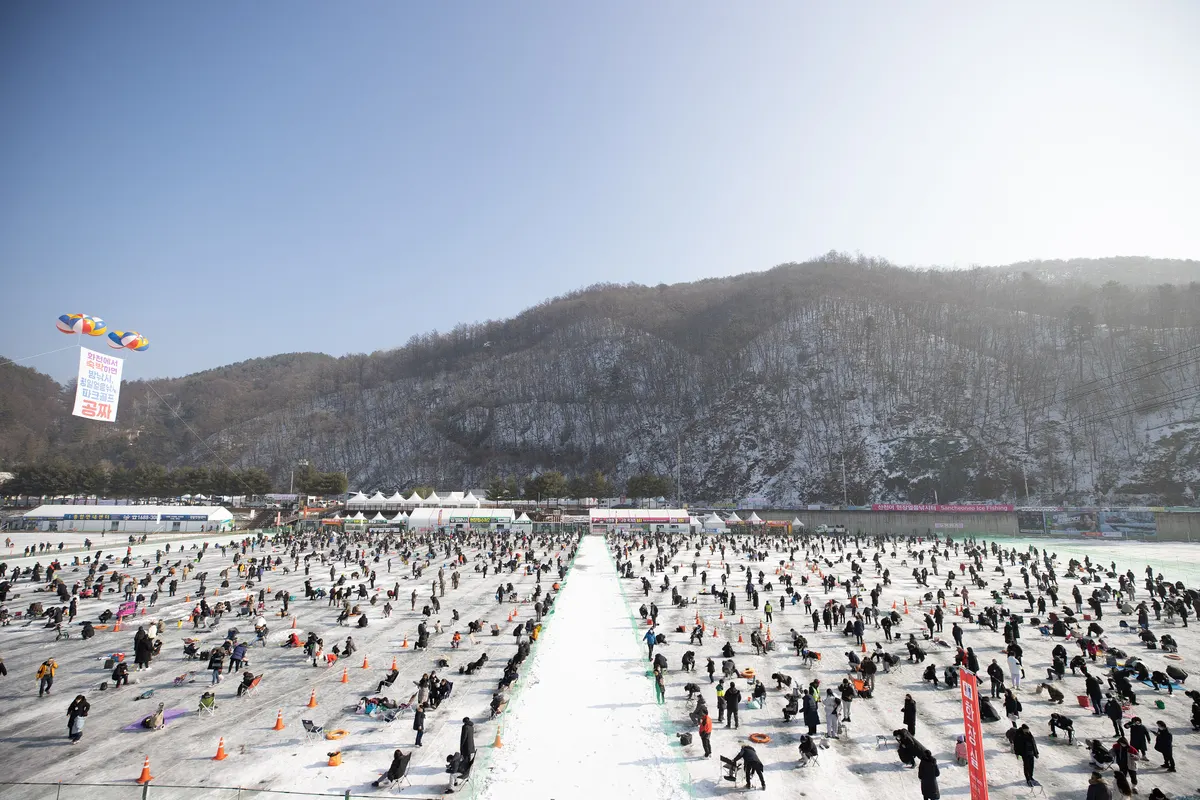
Festival dates, opening days and whether the ice is thick enough change every year, so check the official festival site or VisitKorea close to your trip.
Does the Han River freeze in January?
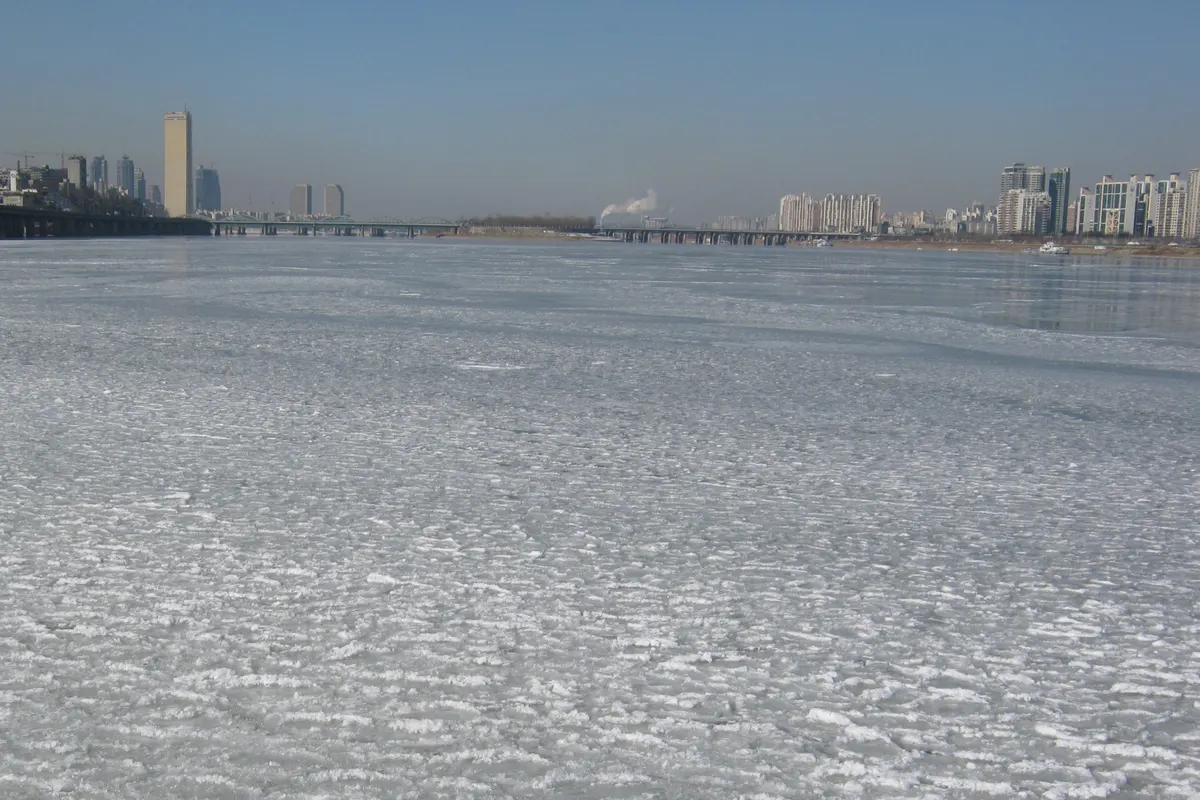
Sometimes. The Korea Meteorological Administration declares the Han River frozen when ice fully covers a marked stretch near Hangang Bridge, and its average freezing date is 10 January, but in nine winters on record it never froze at all.
The river tends to freeze only after Seoul's lows stay below −10 °C for about five days in a row. Even then, walking on the ice is not allowed. The riverside parks are still worth a cold, clear afternoon: the bike paths are quiet, the bridges are sharp against the winter sky, and in a deep freeze you can see plates of ice drifting downstream.
What can you do indoors in Seoul in January?
On the coldest days, plan around places you can reach straight from the subway. Seoul's museums, underground shopping centers, bathhouses and saju cafes work as well in a cold wave as in the rain.
- Museums. The National Museum of Korea in Yongsan and the palace museums make a full warm day.
- Underground shopping centers. Long corridors of small shops run under big stations, so you can walk for blocks without going outside.
- A jjimjilbang. A Korean bathhouse with hot baths, sauna rooms and a heated floor to rest on, a classic winter habit.
- A saju cafe. A one-on-one Korean astrology reading at a warm table, often with a hot drink.
Our rainy day in Seoul guide lists more indoor plans that work just as well in January.
What should you pack for Korea in January?
Pack for real cold: a long padded coat, thermal layers, a hat, gloves and a scarf. Koreans dress warmly in January, and a knee-length padded coat is the everyday winter uniform.
- A long padded coat. The wind along the river and between tall buildings is the coldest part of the day.
- Thermal underlayers. Indoors is well heated, so layers you can take off work better than one thick sweater.
- Hat, gloves and scarf. Touchscreen gloves help with maps and subway apps.
- Warm, grippy shoes. Pavements can be icy in the morning after snow.
- Hand warmers. Disposable heat packs are sold in convenience stores.
- Moisturiser and lip balm. Heated rooms and winter air are very dry.
Is January 2027 still the Fire Horse year in saju?
Yes. In saju, the year changes at Ipchun, the start of spring, not on 1 January, so the 丙午 Fire Horse year of 2026 runs until 4 February 2027 at 10:46 Korea time, when the 丁未 Fire Goat year begins.
The saju month also turns inside January. Until 5 January 2027 at 23:09 Korea time, the month pillar is 庚子, the Rat month; from that moment it is 辛丑, the Ox month, which lasts until Ipchun. So a baby born in Seoul on 20 January 2027 has the year pillar 丙午 and the month pillar 辛丑, by PAL:JA's engine.
| Dates (Korea time) | Year pillar | Month pillar |
|---|---|---|
| 1 Jan 2027 to 5 Jan 2027 23:09 | 丙午 (Fire Horse) | 庚子 (Rat month) |
| 5 Jan 2027 23:09 to 4 Feb 2027 10:46 | 丙午 (Fire Horse) | 辛丑 (Ox month) |
| From 4 Feb 2027 10:46 | 丁未 (Fire Goat) | 壬寅 (Tiger month) |
That is why anyone born in January, in any year, has the zodiac animal of the year before in saju. Our post on being born in early February covers the edge cases around Ipchun, and the Fire Horse year post explains what 丙 and 午 mean. Seollal, Korean New Year, comes later, on 7 February 2027; see Korean New Year 2027.
Can you visit a saju cafe in Korea in January?
Yes. January is a popular month for a reading, because many Koreans look at the year ahead before Seollal and Ipchun. The PAL:JA saju cafe map shows saju cafes in Seoul and Busan, and you can send a booking request from a cafe's page.
A saju cafe is a small cafe or consultation room where a reader turns your birth date and time into a chart and talks you through it. Booking requests are free to send, and PAL:JA calls the cafe in Korean for you; you pay the cafe directly. Most readers speak only Korean, so the Cafe Translator runs a two-way interpreter for the reading as a paid one-hour session.
What should you know before a saju reading?
Bring your birth date, birth time and birth city, and find your saju type before the trip. Your saju type, which saju experts call your Day Master (日干), is the heavenly stem of the day you were born.
There are ten saju types, from Big Tree (甲) to Morning Dew (癸). Knowing yours makes a fast Korean reading much easier to follow. Sign in and open your chart with 1 bok ($1.99) on the saju type page, or right here.
Calculate your saju chart
PAL:JA builds your chart with fixed saju rules and corrects your birth time to true solar time from your birth city's longitude, so the chart you bring matches the one a careful reader builds.
Is January a good time to visit Korea?
Yes, if you like cold, clear weather. January has bright days, short queues at palaces, ski and ice-fishing season, and warm indoor culture, but you need a proper winter coat.
How cold is Seoul at night in January?
Seoul's average January low is −5.5 °C (22 °F), and cold waves can push nights below −10 °C. Plan your evenings around indoor places close to the subway.
Is Busan warmer than Seoul in January?
Yes. Busan's average January high is 8.2 °C (47 °F) against 2.1 °C (36 °F) in Seoul, and it rarely snows on the coast, though the sea wind still feels cold.