Rainy Day in Seoul: Museums, Malls, Spas and Korean Horoscope
· PAL:JA
Saju is Korean astrology: a birth chart read from the year, month, day and hour you were born. On a rainy day in Seoul, the best plan is to stay indoors and connected to the subway: the National Museum of Korea, Starfield Library inside COEX, the long underground shopping centers under the big stations, a jjimjilbang bathhouse, and a Korean horoscope reading at a saju cafe, which is one of the most local things you can do with a wet afternoon.
Seoul is an easy city in the rain because so much of it runs underground. Many large malls and shopping streets connect straight to subway exits, so you can spend a whole day moving between them with your umbrella folded. This guide is written by Koreans who build a saju app, so it covers the travel side first, then how to fit a saju cafe into the day.
What can you do on a rainy day in Seoul?
On a rainy day in Seoul, pick places you can reach from the subway without walking far outside. Museums, big malls, underground shopping centers, bathhouses and saju cafes all work well.
- The National Museum of Korea. A huge national museum in Yongsan, next to Ichon Station.
- Starfield Library at COEX. Towering bookshelves in the middle of an underground mall in Gangnam.
- Underground shopping centers. Long corridors of small shops under stations such as Express Bus Terminal and Gangnam.
- A jjimjilbang. A Korean bathhouse with hot baths, sauna rooms and a shared rest area.
- A saju cafe. A one-on-one Korean astrology reading at a table, often with a drink.
- Palace museums and galleries. Many smaller museums sit close to Seoul's palaces, so a short dry spell can still fit a palace walk.
When does it rain most in Seoul?
Most of Seoul's rain falls in summer, during the monsoon season Koreans call jangma (장마). It usually reaches central Korea in late June and lasts until about late July, and July is the wettest month of the year.
Seoul gets about 414 mm of rain in July alone, according to long-term climate averages. Jangma rarely means nonstop rain: heavy showers often come with dry breaks between them. Spring and autumn are drier, but a rainy day in Seoul can happen in any season, so it helps to keep an indoor plan ready.
Is the National Museum of Korea worth visiting in the rain?
Yes. The National Museum of Korea is one of the largest museums in the world by floor space, and you can spend half a day inside without seeing it all.
The museum moved to its current building in Yongsan in 2005. Its collection holds over 310,000 objects, with about 15,000 on display at a time, from prehistoric tools to Joseon paintings and Buddhist sculpture. Admission to the permanent galleries is free, and special exhibitions charge separately. Take Line 4 or the Gyeongui-Jungang Line to Ichon Station and follow the signs; the museum is a short walk from the station.
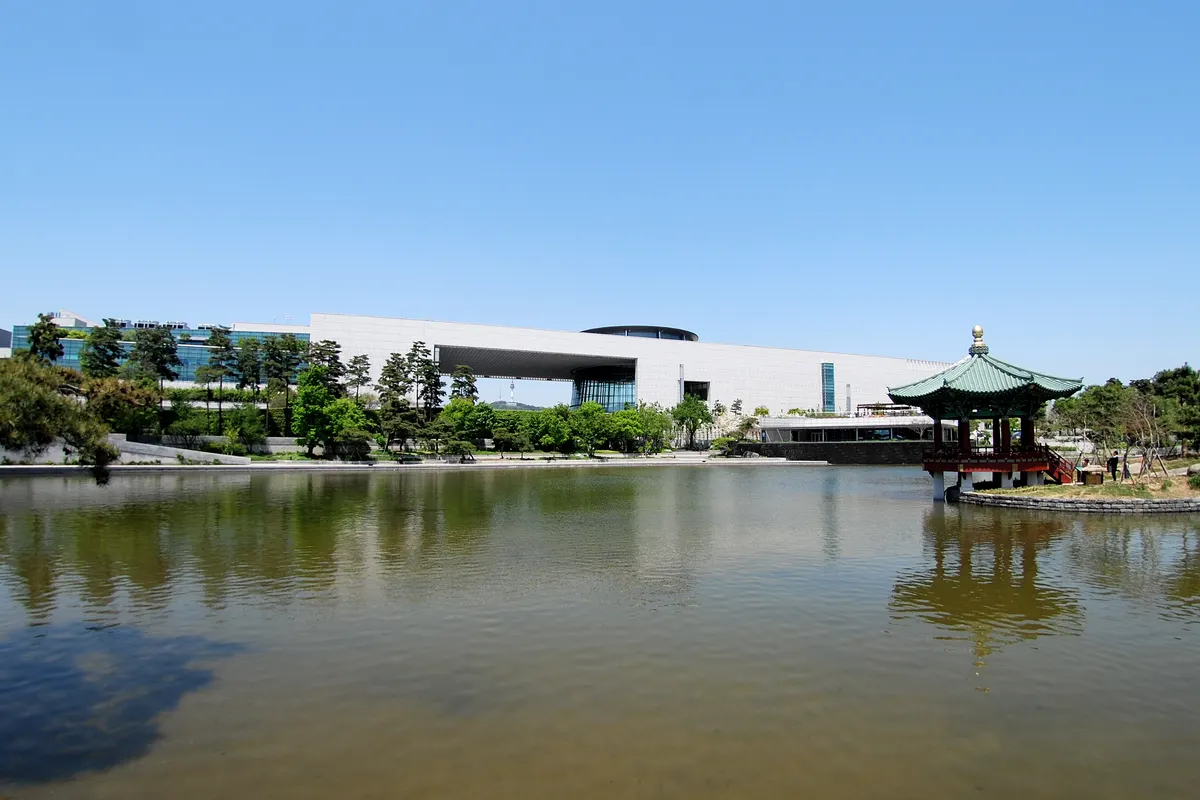
The museum also has a children's museum, cafes and shops, so it works for families. Check the official site for closing days before you go, since the museum closes on a few holidays.
How do you get to Starfield Library at COEX?
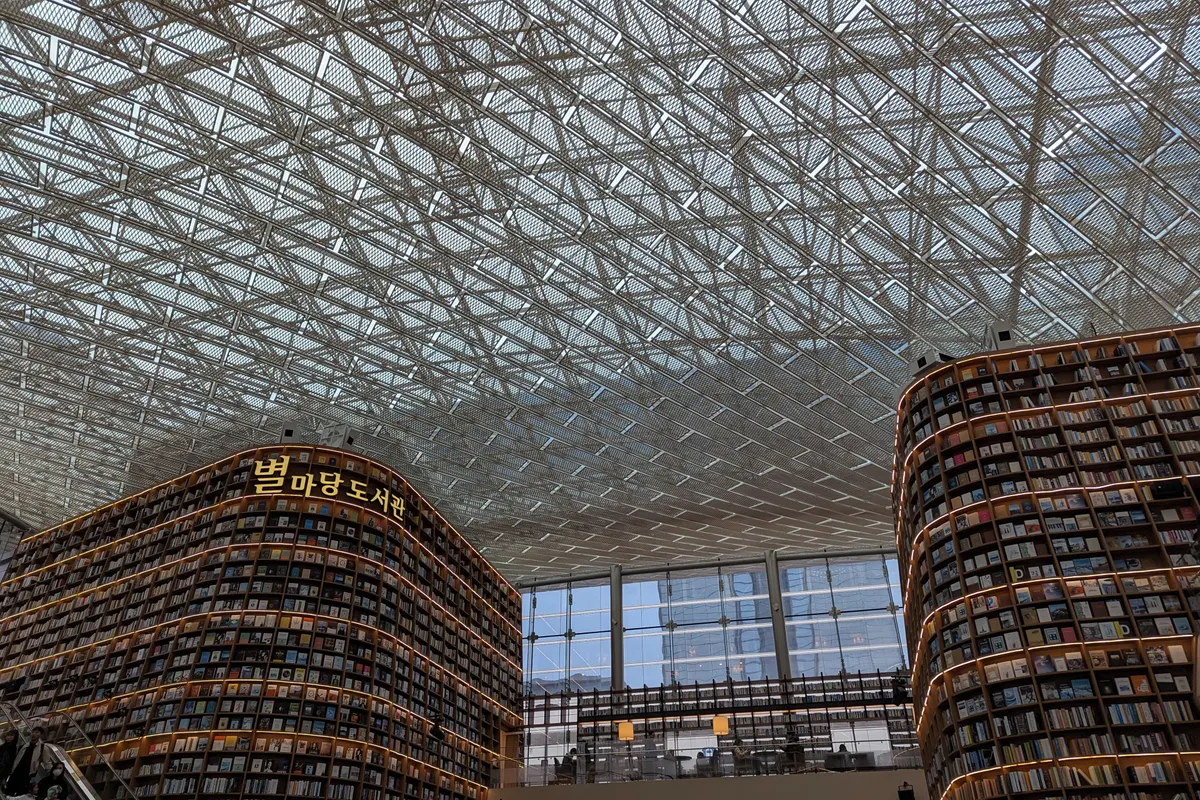
Take Line 2 to Samseong Station or Line 9 to Bongeunsa Station, then follow the signs into Starfield COEX Mall. The library sits in the middle of the mall, so you stay dry the whole way.
Starfield Library opened in 2017. Its bookshelves rise about 13 meters across two floors and hold tens of thousands of books and magazines, which you can browse and read at the seats around them. Entry is free, and it is a popular photo spot. COEX itself is a large underground mall with restaurants, shops, a cinema and an aquarium. If the rain eases, Bongeunsa, a Buddhist temple founded in 794, is just across the street.
Where can you shop underground in Seoul?
Seoul has several long underground shopping centers built into its subway stations. The ones under Express Bus Terminal Station, Gangnam Station and Jamsil Station are among the biggest.
The underground shopping center at Express Bus Terminal Station, served by Lines 3, 7 and 9, is the best known: two long corridors of clothing, accessories, home goods and flower stalls. Gangnam Station has its own underground shopping street, and under Euljiro a walkway of about 3.3 km runs from City Hall Station to Dongdaemun History & Culture Park Station, the longest in Korea. Prices are usually low, and many small shops prefer cash or local cards, so carry some won.
What is a jjimjilbang and how do you use one?
A jjimjilbang is a Korean bathhouse with gender-separated baths and a shared area of heated rooms where everyone wears the clothes provided. It is a classic rainy day in Seoul plan: warm, cheap and good for a few slow hours.
- Store your shoes. Leave them in a shoe locker at the entrance and keep the key.
- Get your locker and clothes. At the counter you receive a locker key, towels and a T-shirt and shorts.
- Wash first. In the bath area, shower thoroughly before entering any pool.
- Relax in the shared area. Try the sauna rooms at different temperatures, nap on the heated floor, and snack on sikhye, a sweet cold rice drink, with roasted eggs.
Rules differ between places. Some do not allow visitors with large tattoos, and the bath area is usually without swimwear, so check the rules at the one you choose.
Is a saju cafe a good plan for a rainy day in Seoul?
Yes. A saju cafe is fully indoors, takes about 30 minutes to an hour, and is something Koreans do with friends, a bit like going to a karaoke room. The PAL:JA saju cafe map lists 53 saju cafes in Seoul, out of 71 across Seoul and Busan.
The most cafes are in Hongdae (24), then Gangnam, Apgujeong and Sinsa (12), a short subway ride from COEX, and Ikseon-dong, Insadong and Jongno (10), near the palaces. A saju cafe is a small cafe or consultation room where a reader turns your birth date and time into a chart and talks you through it at the table. Our saju cafe guide for Seoul explains what happens during a reading, and our list of unique things to do in Seoul has more ideas for the rest of your trip.
How do you book a saju cafe in Seoul without speaking Korean?
Open a cafe on the saju cafe map and send a booking request, and PAL:JA calls the cafe in Korean for you. When your time is confirmed, PAL:JA contacts you by WhatsApp or text message.
- Book at least 3 days ahead. Weekends fill up, so send the request before you fly.
- Sign in first. Requests need a Google or Apple sign-in.
- Confirm the day before. Tap "I'm coming" or Cancel in My bookings by 24 hours before, or the booking is cancelled automatically.
- Pay the cafe directly. PAL:JA charges nothing for booking and takes no payments.
Some cafes do not take requests through PAL:JA. For those, the cafe page shows the address in English and Korean, the phone number and directions, so you can call, show a taxi driver or simply walk in. Most readers speak only Korean, and the Cafe Translator is a two-way interpreter built for saju readings. It is a paid feature, charged per one-hour session.
What should you know before your saju reading?
Know your birth date, your birth time and your birth city, and look up your saju type before the trip. Your saju type, which saju experts call your Day Master, is the heavenly stem of your day pillar and one of ten.
The ten saju types are Big Tree (甲), Wildflower (乙), Sun (丙), Candlelight (丁), Mountain (戊), Garden Soil (己), Sword (庚), Jewel (辛), Ocean (壬) and Morning Dew (癸). If you already know yours and its element, the reader's terms are much easier to follow. Sign in and open your chart with 1 bok ($1.99) on the saju type page, or right here, to see it.
Calculate your saju chart
PAL:JA builds your chart with fixed saju rules and true solar time for your birth city, not just the clock time. In Seoul, the sun runs about 32 minutes behind the clock, which can shift your hour pillar if you were born near the change of an hour. Our guide to what a Day Master is explains all ten types.
What is a good rainy day itinerary in Seoul?
Spend the morning at the National Museum of Korea, cross the river to COEX for lunch and Starfield Library, then take your saju reading and end the day in a jjimjilbang. Every stop is a short walk from a subway station.
| Time | Where | What to do |
|---|---|---|
| 10:00 | National Museum of Korea, Ichon Station | Permanent galleries, about two to three hours |
| 13:00 | COEX, Samseong or Bongeunsa Station | Lunch in the mall, then Starfield Library |
| 15:00 | Express Bus Terminal Station | Underground shopping |
| 17:00 | A saju cafe on the map | Your booked reading, about 30 minutes |
| 19:00 | A jjimjilbang | Hot baths, sauna rooms and a late snack |
If the rain stops, swap the shopping for a walk at Bongeunsa or a palace. For more planning help, see our first trip to Korea tips.
Is Seoul worth visiting in the rainy season?
Yes. Summer rain in Seoul usually comes in bursts, and the city has enough indoor, subway-connected places to fill several wet days.
Where can you buy an umbrella in Seoul?
Convenience stores across Seoul sell umbrellas, and many sit right at subway exits.
Do saju readers in Seoul speak English?
Most readers speak only Korean, so plan for a Korean reading. Bring a Korean-speaking friend or use the PAL:JA Cafe Translator, and remember that tipping is not expected in Korea.