Unique Things to Do in Seoul: 7 Local Experiences
· PAL:JA
If you are looking for unique things to do in Seoul, skip the checklist of towers and malls and do what Seoul residents do on a day off. This guide covers seven local experiences, from a saju reading at a saju cafe to an evening in a Korean bathhouse, with where to go, how to get there and what to know before you walk in.
It is written by Koreans who build a saju app in Seoul, so the saju cafe part goes deepest. The subway reaches all seven, and a rechargeable T-money card works on trains, buses and at many convenience stores.
What are the most unique things to do in Seoul?
The seven below are everyday Korean experiences that many first-time visitors miss. The table sums up where each one happens and how much time to give it.
| Experience | Where | Best time | Time to allow |
|---|---|---|---|
| Saju reading at a saju cafe | Hongdae, Ikseon-dong, Gangnam, Myeongdong, Seongsu | Afternoon or evening | About 1 hour |
| Palace visit in hanbok | Gyeongbokgung, Changdeokgung | Morning | 2 to 3 hours |
| Jjimjilbang (Korean bathhouse) | All over the city | Evening | 2 to 4 hours |
| Traditional market | Gwangjang Market, Mangwon Market | Lunch or early evening | 1 to 2 hours |
| Han River at night | Yeouido, Banpo | After sunset | About 2 hours |
| Temple stay or temple program | Jogyesa, Bongeunsa | Booked ahead | Half a day to overnight |
| Seoul City Wall walk | Naksan Park | Late afternoon into dusk | 1 to 2 hours |
Why is a saju cafe reading worth adding to your Seoul trip?
A saju reading is the one thing on this list that is about you, not the city. Saju (四柱, Four Pillars) is the Korean system of reading personality and timing from your birth year, month, day and hour, and many Koreans visit a saju cafe with friends the way others meet for coffee.
At a saju cafe, a reader turns your birth date and time into a chart and talks you through it, usually in about 30 minutes, often over a drink. Koreans go before a job change, at the start of a new year, or as a couple to compare charts. Our first-visit guide to saju cafes in Seoul covers costs, etiquette and the Korean phrases that come up at the table.
Where to go depends on the rest of your day:
- Hongdae. The biggest cluster on our map, around Hongik University Station (Line 2), and an easy pairing with Mangwon Market.
- Ikseon-dong and Jongno. Hanok alleys a short walk from the palaces, so a reading fits neatly into a hanbok day.
- Gangnam and Apgujeong. Handy if you are staying south of the river.
- Myeongdong and Seongsu. A few cafes near the shopping streets.
What should you know before a saju reading in Seoul?
Bring your birth date, your birth time and your birth city, and say whether your birthday is solar or lunar. The date on your passport is solar.
The reader uses those details to build four pillars, one each for your birth year, month, day and hour. The day pillar holds your saju type, which saju experts call your Day Master (日干): one of ten types, such as Big Tree (甲), Sun (丙), Ocean (壬) or Morning Dew (癸). Knowing yours before the trip makes the reader's terms far easier to follow, and our guide to the ten saju types explains each one.
Find your saju type before you fly. It is free with no sign-up on the saju type page, or right here.
Calculate your chart — free
PAL:JA builds the chart with fixed saju rules and corrects your birth time to true solar time for the city you were born in. That matters more than people expect: in Seoul the sun runs about 32 minutes behind the clock, which can move a birth near the edge of a two-hour slot into the next hour pillar.
How do you book a saju cafe if you don't speak Korean?
Use the saju cafe map on PAL:JA. It lists 71 saju cafes confirmed open on Naver Map or Kakao Map in October 2026: 53 in Seoul across Myeongdong, Hongdae, Seongsu, Gangnam and Ikseon-dong, and 18 in Busan.
- Request a booking. For cafes that take requests, pick a date at least 3 days ahead and PAL:JA calls the cafe in Korean for you. A Google or Apple sign-in is needed.
- Get confirmed. We contact you by WhatsApp or text message once your time is confirmed. You pay the cafe directly, and PAL:JA charges nothing for the booking.
- Reconfirm. Tap "I'm coming" or Cancel in My bookings by 24 hours before, or the booking is cancelled automatically.
- Find the door. Each cafe page has the address to show your taxi driver, plus directions.
- Bring the interpreter. If the reader speaks only Korean, the Cafe Translator is a two-way interpreter built for saju terms, and the screen flips so the reader can read their side across the table. It needs a sign-in and is a paid feature.
How do you visit a Seoul palace in hanbok?
Rent a hanbok, Korea's traditional dress, from one of the rental shops near Gyeongbokgung Station (Line 3) and walk into the palace wearing it. Visitors in traditional hanbok get free entry to Seoul's main royal palaces, though some costume-style outfits do not count.
Gyeongbokgung is the largest of Seoul's five Joseon-era palaces, and the changing of the royal guard takes place at Gwanghwamun, its main gate. Go in the morning for softer light and smaller crowds. Changdeokgung, east of Bukchon, is quieter, and its Secret Garden is seen on a separate guided tour.
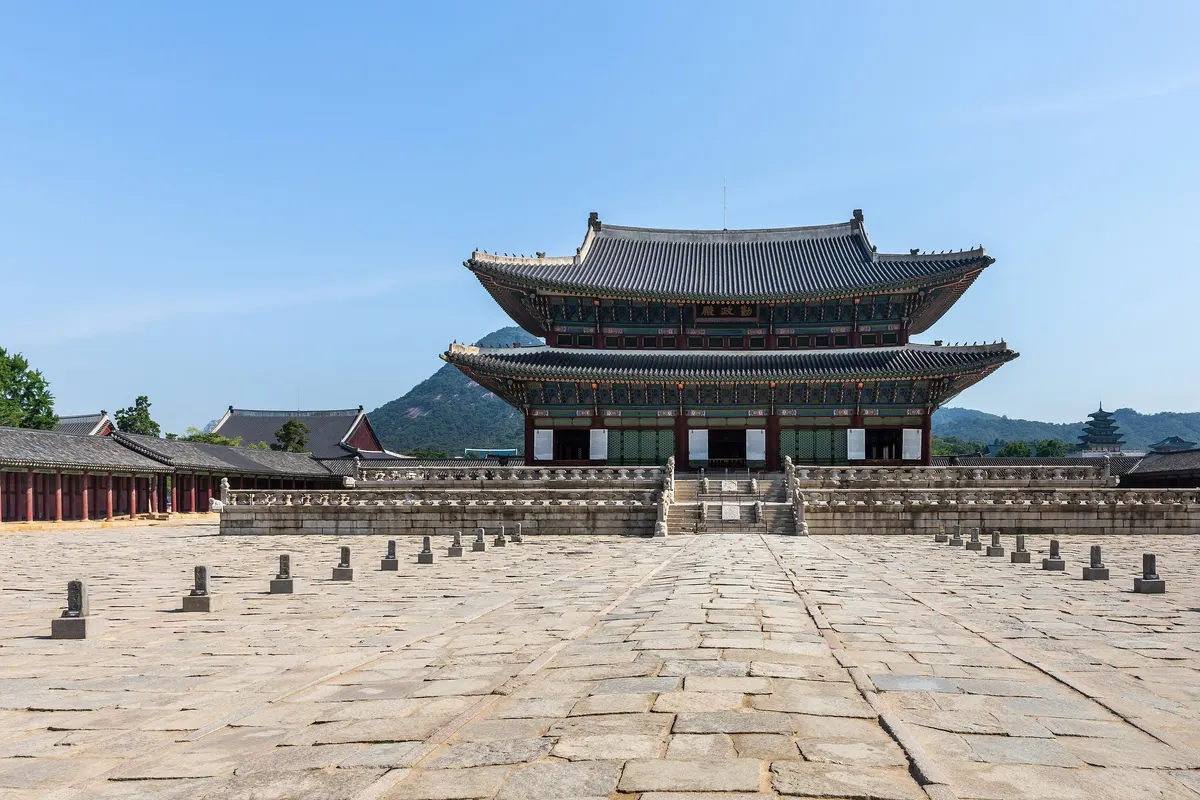
Each palace closes one day a week: Gyeongbokgung on Tuesdays and Changdeokgung on Mondays. Between the two, walk through Bukchon Hanok Village quietly, because people live in those houses.
What is a jjimjilbang and how do you use one?
A jjimjilbang is a Korean bathhouse with gender-separated baths and a shared area of heated rooms where families, friends and couples relax together in matching clothes. Many stay open around the clock.
- Leave your shoes in the shoe locker at the entrance, then pay at the front desk for a key, towels and a set of clothes.
- In the bath area, nudity is normal. Shower thoroughly before getting into any pool.
- Change into the provided clothes for the shared area, with its hot rooms, sleeping mats and snack bar.
- Order the classics: baked eggs and sikhye, a sweet rice drink, and fold a towel into the "sheep head" shape for a photo.
Which traditional market in Seoul should you visit?
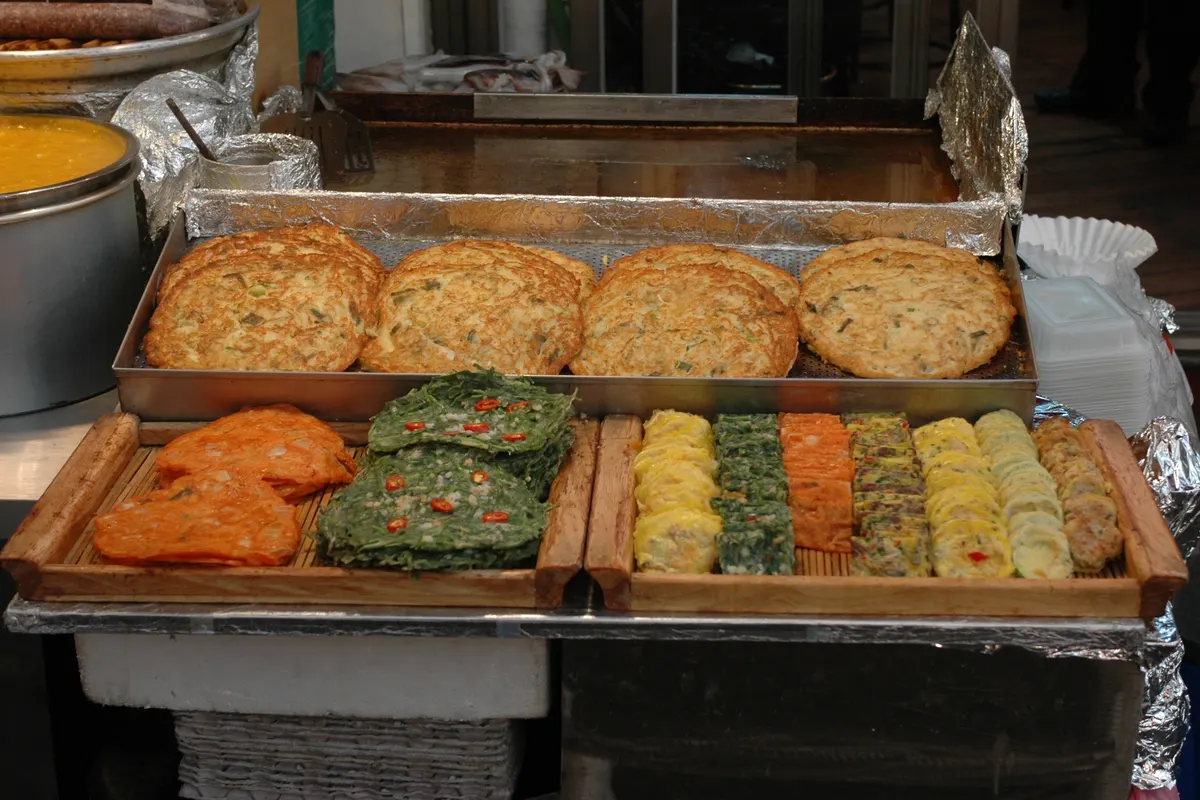
For street food, go to Gwangjang Market at Jongno 5-ga Station (Line 1). For a neighbourhood market where locals do their shopping, go to Mangwon Market at Mangwon Station (Line 6).
Gwangjang is one of Seoul's oldest markets, known for bindaetteok (mung bean pancakes) and benches where you eat shoulder to shoulder with strangers. Mangwon is close to Hongdae, so it pairs well with a saju cafe afternoon. Carry some cash for small stalls, point at what you want, and do not worry about tipping: it is not a normal practice in Korea.
Where can you see the Han River at night?
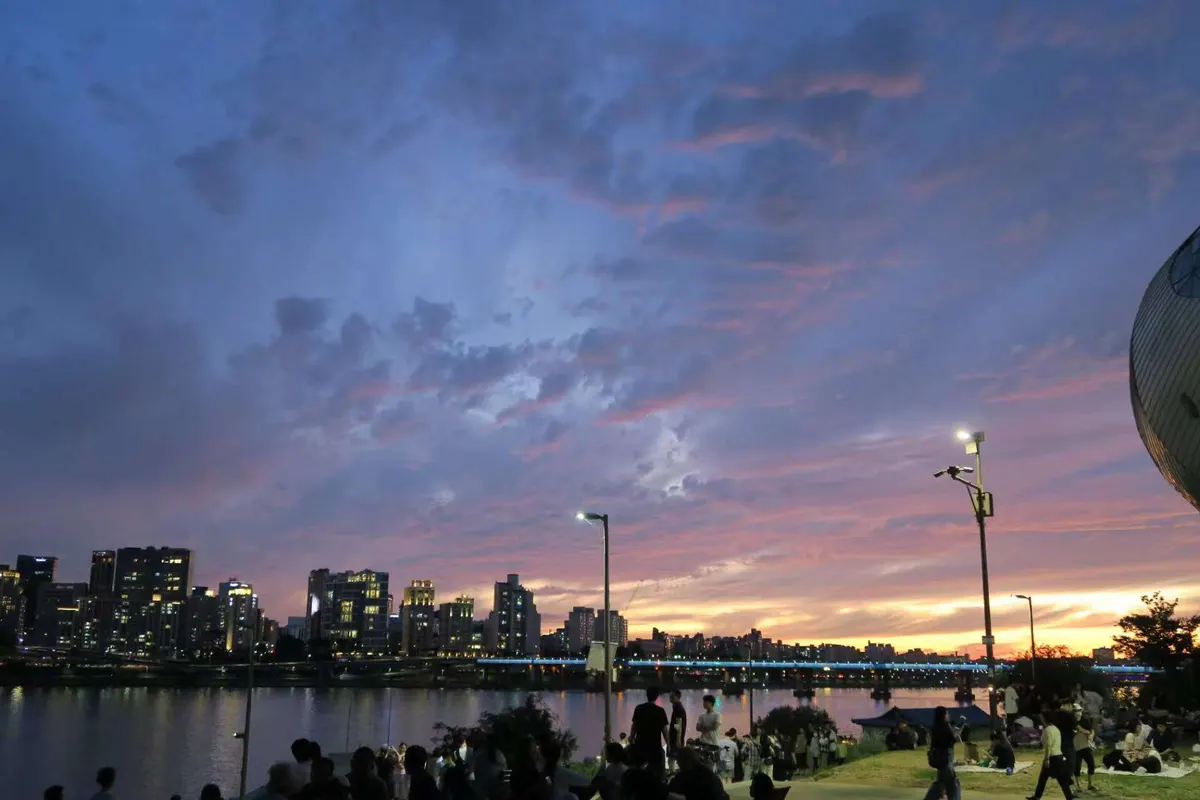
Go to Yeouido Hangang Park, at Yeouinaru Station (Line 5), for a picnic by the water, or to Banpo Hangang Park for the Moonlight Rainbow Fountain on Banpo Bridge. The fountain runs in the warmer months, roughly spring to autumn, with short evening shows.
The local way to do it: buy instant ramyeon at a riverside convenience store, cook it in the store's ramyeon machine and eat it on the grass, or order fried chicken and beer, called chimaek, to the park.
Can you do a temple stay in Seoul?
Yes. Jogyesa in central Jongno and Bongeunsa in Gangnam, across the road from COEX, both run programs for visitors, from a few hours to an overnight stay.
Templestay is a program run by Korea's largest Buddhist order in which temples open their daily routine to visitors: early-morning chanting, meditation, a tea ceremony, temple food and 108 bows. Programs fill up, so book online before your trip and pick one offered in English. Dress modestly and keep your voice low in the halls, since these are working places of worship.
How do you walk the Seoul City Wall at Naksan?
Take the subway to Hyehwa Station (Line 4) and walk up through Naksan Park to the stone wall that once ringed the old capital. Go in the late afternoon so the walk ends as the city lights come on.
Parts of the path pass residential lanes, so keep your voice down near the houses.
How do you fit these into one Seoul trip?
Group them by area so each day stays on one or two subway lines. A plan of 3 to 4 days covers all seven.
- Day 1, old Seoul. Hanbok and Gyeongbokgung in the morning, Ikseon-dong and a saju cafe in the afternoon, Gwangjang Market for dinner.
- Day 2, west side. Mangwon Market for lunch, the streets of Hongdae, then Yeouido Hangang Park after dark.
- Day 3, south side. A temple program at Bongeunsa, then Banpo for the fountain.
- Day 4, or any free evening. Naksan at dusk, then a jjimjilbang to end the day.
Do you need to speak Korean for these experiences?
Not for most of them: palaces, markets, the river and the city wall work fine with pointing and a translation app. A saju reading is the exception, because many readers speak only Korean, so plan for an interpreter or a Korean-speaking friend.
Is a saju cafe reading only for people who believe in it?
No. Many Koreans go for fun, the way friends might take a personality quiz together, and treat the reading as a talk about tendencies and timing rather than fixed outcomes.
For more on what to ask and how readings in English work, see saju reading in English.
What is the best season for these Seoul experiences?
Spring and autumn are the most comfortable seasons for the palaces, the river and the wall. Winter suits a jjimjilbang best, and a saju cafe works at any time of year.