
Things to Do in Gangnam: COEX, K-pop and Korean Horoscope Cafes
· PAL:JA
Saju is Korean astrology: a birth chart read from the year, month, day and hour you were born. The best things to do in Gangnam are seeing Starfield Library inside COEX, walking up to Bongeunsa temple across the road, strolling the ginkgo-lined Garosu-gil, following the K-pop statues on K-Star Road and spending an evening around Gangnam Station. Gangnam is also a good place to try a Korean horoscope reading at a saju cafe, a part of Korean culture most visitors never see.
Gangnam (江南) means "south of the river", and it covers the side of Seoul south of the Han River, mostly Gangnam-gu with part of Seocho-gu. It is newer, wider and glossier than the old city north of the river. If saju is new to you, start with what saju is. This guide covers the travel side first, then how to fit a saju cafe into your day.
What are the best things to do in Gangnam?
The top things to do in Gangnam are Starfield Library and COEX, Bongeunsa temple, Garosu-gil, K-Star Road and the Gangnam Station area. They sit in three clusters, so plan your day by subway line rather than on foot.
- Starfield Library at COEX. Bookshelves 13 meters tall in the middle of a huge underground mall, free to walk in.
- Bongeunsa. A Buddhist temple founded in 794, right across the road from COEX.
- Garosu-gil. A street of ginkgo trees, boutiques and cafes in Sinsa-dong.
- Apgujeong and Cheongdam. Luxury fashion streets and K-Star Road, a walk lined with K-pop bear statues.
- Gangnam Station. One of the busiest stations in Seoul, with underground shopping and a lively evening scene.
- A saju reading. Gangnam has 12 saju cafes on the PAL:JA map, near Gangnam Station and in Sinsa and Apgujeong.
How do you get to Gangnam by subway?
Line 2 is the main line through Gangnam, with stops at Gangnam, Yeoksam, Seolleung and Samseong for COEX. Line 3 serves Sinsa for Garosu-gil and Apgujeong, and the Suin-Bundang Line stops at Apgujeong Rodeo for K-Star Road.
Line 9 has Bongeunsa Station right next to COEX, and the Shinbundang Line runs from Sinsa through Gangnam Station. A T-money card covers every line and the buses, and you can top it up with cash at convenience stores and station machines.
What is Starfield Library at COEX?
Starfield Library is a free, open library in the middle of Starfield COEX Mall, built around bookshelves 13 meters tall. It is on the basement level and the first floor, near Samseong Station on Line 2 and Bongeunsa Station on Line 9.
The shelves hold tens of thousands of books and magazines, mostly in Korean, with a rack of international magazines too. Go on a weekday morning if you want photos without crowds.
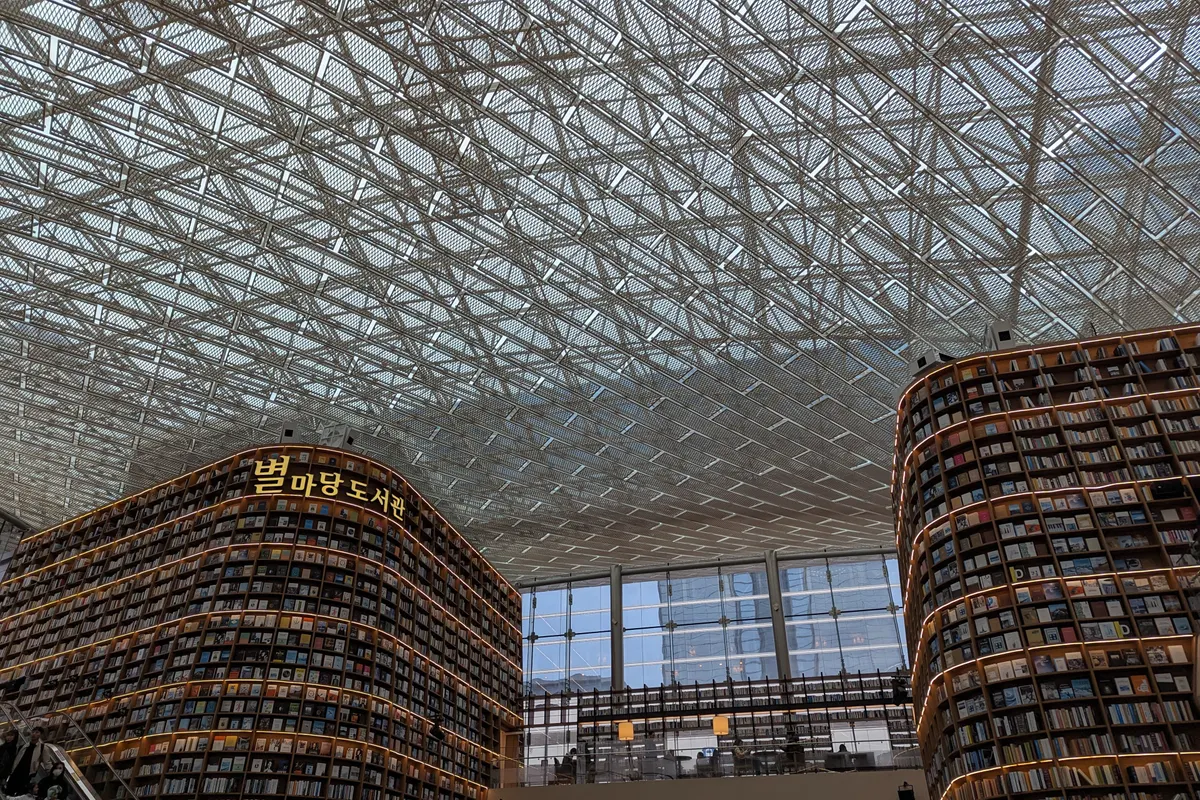
COEX itself is one of the largest underground malls in the world, with shops, restaurants, a cinema and the COEX Aquarium. At its east entrance, the Gangnam Style statue, two giant bronze hands in the song's horse-riding pose, plays the song when you step up to it.
Is Bongeunsa temple worth visiting?
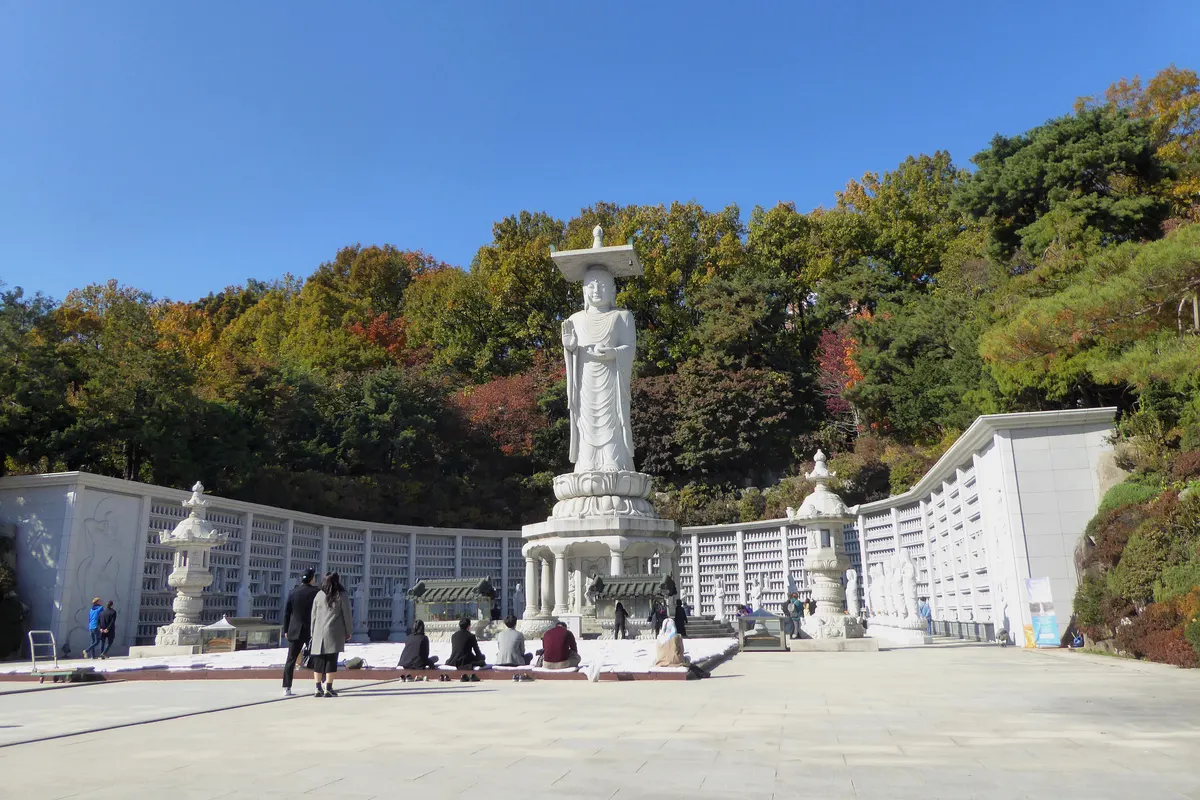
Yes. Bongeunsa is a working Buddhist temple founded in 794, during the Silla period, and it sits on a wooded slope directly opposite COEX, so it is an easy and calm break from the mall.
The highlight is the Mireuk Daebul, a tall standing statue of the Maitreya Buddha that looks out over the city. The Panjeon hall keeps woodblocks of the Flower Garland Sutra carved in 1855. Bongeunsa also runs a templestay program, where visitors can try temple life, including a formal monastic meal. Dress modestly and speak quietly near the halls, especially during ceremonies.
What is Garosu-gil known for?
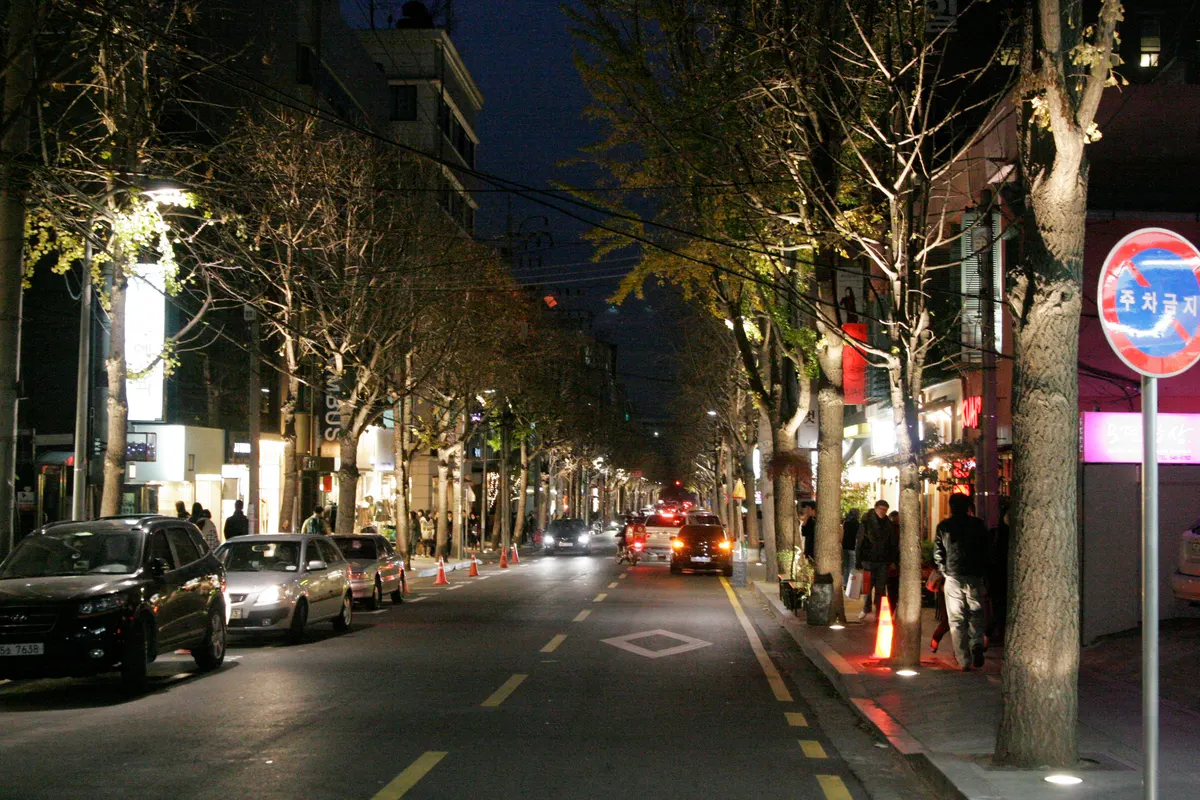
Garosu-gil is a street in Sinsa-dong known for its ginkgo trees, small fashion boutiques and cafes. The name means "tree-lined street", and it is a short walk from Sinsa Station on Line 3 and the Shinbundang Line.
Autumn is the best season, when the ginkgo leaves turn yellow. Garosu-gil connects along Apgujeong-ro to Apgujeong Rodeo Street and Cheongdam, so you can walk or ride one stop east.
Where are the K-pop spots in Gangnam?
The main K-pop spots are in Apgujeong and Cheongdam, where many K-pop management companies have their offices. K-Star Road runs about 1 km along Apgujeong-ro from Apgujeong Rodeo Station toward the Cheongdam intersection.
Along K-Star Road stand GangnamDol (Gangnam Idol) statues, large bear figures each decorated for a K-pop group. They are moved from time to time, so do not plan your day around one particular statue. Nearby, Cheongdam Fashion Street is a stretch of Apgujeong-ro lined with luxury brand stores. Fans often walk past company buildings, but stay on the public street, keep the entrances clear and do not wait for artists.
What is there to do around Gangnam Station?
Gangnam Station, on Line 2 and the Shinbundang Line, is one of the busiest stations in Seoul and the center of an evening scene of restaurants, bars and shops. It also sits at the western end of Teheran-ro, the avenue of office towers.
The underground passages around the station are lined with small shops for clothes and accessories. Above ground, the streets north of the station fill up after work with Korean barbecue, fried chicken and pubs. Tipping is not expected in Korea, at restaurants or anywhere else.
Are there saju cafes in Gangnam?
Yes. The PAL:JA saju cafe map lists 12 saju cafes in the Gangnam, Apgujeong and Sinsa area: 9 offer saju and tarot together, and 3 offer saju only.
5 of the 12 are around Gangnam Station, and 7 are in Sinsa and Apgujeong, close to Garosu-gil and K-Star Road. Most list hours into the late evening, so a reading fits well after dinner. A saju cafe is a small cafe or consultation room where a reader turns your birth date and time into a chart and talks you through it, often for about 30 minutes. Our saju cafe guide for Seoul explains what happens during a reading.
The saju cafe map covers 71 cafes across Seoul and Busan and only shows cafes confirmed open on Naver Map or Kakao Map, with the address in English and Korean, the phone number and listed hours. Hours can change, so check the listing on the day.
How do you book a saju cafe in Gangnam as a foreigner?
Send a booking request from the cafe's page on the PAL:JA map, and PAL:JA calls the cafe in Korean for you. You hear back by WhatsApp or text message when your time is confirmed.
- Sign in. Booking requests need a Google or Apple sign-in.
- Book ahead. Requests need at least 3 days' notice, so send one before your flight.
- Pay the cafe. PAL:JA charges nothing for the booking. You pay the cafe directly.
- Confirm or cancel. Tap "I'm coming" or Cancel in My bookings by 24 hours before, or the booking is cancelled automatically.
- Some cafes skip requests. If a cafe does not take requests through PAL:JA, call or walk in instead.
Most readers speak only Korean. The Cafe Translator is a two-way interpreter built for saju readings, and the reader's half of the screen flips so they can read it across the table. It is a paid feature, charged per one-hour session.
What should you know before your saju reading in Gangnam?
Know your birth date, birth time and birth city, and find your saju type before the trip. Your saju type, which saju experts call your Day Master, is the heavenly stem of your day pillar and one of ten.
The ten saju types are Big Tree (甲), Wildflower (乙), Sun (丙), Candlelight (丁), Mountain (戊), Garden Soil (己), Sword (庚), Jewel (辛), Ocean (壬) and Morning Dew (癸). Knowing yours makes the reader's terms far easier to follow. Sign in and open your chart with 1 bok ($1.99) on the saju type page to see it, or right here.
Calculate your saju chart
PAL:JA builds your chart with fixed saju rules and true solar time for your birth city, not just the clock time. In Seoul, the sun runs about 32 minutes behind the clock, which can shift your hour pillar if you were born near the change of an hour. The guide to the ten saju types explains what each one tends to be like.
What is a good one-day plan for Gangnam?
Start at COEX and Bongeunsa in the morning, ride to Sinsa for Garosu-gil at lunch, walk K-Star Road in the afternoon, then finish at Gangnam Station with dinner and a saju reading. Every move is a short subway ride.
| Time | Stop | Tip |
|---|---|---|
| 10:00 | Bongeunsa | Bongeunsa Station, Line 9; quiet in the morning |
| 11:30 | Starfield Library and COEX | Weekday mornings are calmer for photos |
| 13:00 | Garosu-gil | Sinsa Station, Line 3; lunch in a side lane |
| 15:00 | K-Star Road and Cheongdam | Apgujeong Rodeo Station; statues move now and then |
| 18:00 | Gangnam Station | Dinner in the streets north of the station |
| 20:00 | Saju reading at a booked cafe | Bring your birth date, time and city |
For more ideas across the city, see our unique things to do in Seoul and first trip to Korea tips.
Is Gangnam worth visiting for tourists?
Yes. Gangnam gives you a different Seoul from the palaces up north: K-pop streets, a temple more than 1,200 years old next to a giant mall, and some of the city's best shopping.
How long do you need in Gangnam?
One full day covers COEX, Bongeunsa, Garosu-gil, K-Star Road and an evening at Gangnam Station. Half a day is enough for COEX and Bongeunsa alone.
Do saju readers in Gangnam speak English?
Most readers speak only Korean, so plan for a Korean reading. Bring a Korean-speaking friend or use the PAL:JA Cafe Translator, and remember that tipping is not expected in Korea.